
·8 min read
7 Things You Can Only See in Azerbaijan (2026 Guide)
From Gobustan's mud volcanoes to the Flame Towers and Khinalug, discover seven one-of-a-kind sights you'll find nowhere but Azerbaijan.
Azerbaijan packs an unusual concentration of one-of-a-kind sights into one country: fields of bubbling mud volcanoes, flame-shaped skyscrapers, Stone Age rock art, a palace covered in stained glass, and a mountain village among the highest in the Caucasus. Some of these you simply cannot find anywhere else; others exist elsewhere but not at this scale or in this combination. Here are seven things you can really only experience here, and how to fit them into a trip.
1. Mud volcanoes in Gobustan
Azerbaijan is home to a large share of the world's mud volcanoes, and the easiest place to see them is around Gobustan, south of Baku. Cold mud bubbles and erupts from cone-shaped vents, creating an otherworldly grey landscape that looks like nowhere else on Earth.
What makes them so strange is that, unlike the fiery volcanoes most people picture, these are cold, the "eruptions" are driven by underground gas pushing mud and water to the surface, so you can safely walk right up to the gurgling cones. The vents are spread across bare hills, and reaching them usually means a short transfer over rough tracks, so most visitors join a tour or hire a local driver for the final stretch. It's a genuinely photogenic, slightly surreal half-day out.
2. The Flame Towers in Baku
Baku's Flame Towers are three flame-shaped skyscrapers that dominate the skyline. After dark they become giant screens, lit with changing LED displays, a nod to Azerbaijan's historic association with fire.
That association is not marketing invention. Azerbaijan has long been called the "Land of Fire," a name rooted in the natural gas that seeps to the surface here and in ancient fire-worship traditions. The towers are the modern, unmissable version of that story, visible from much of the city and especially striking from the Caspian seafront at night. For more on the capital and how to plan your days there, see why visit Baku.
3. The Caspian Sea
Azerbaijan's entire eastern edge meets the Caspian Sea, the largest inland body of water on the planet. Walk the Baku seafront or look out over the water and you're standing beside something no truly landlocked or ocean country can claim.
The Caspian has shaped Baku for centuries, from the oil and gas beneath it to the breezy promenade that lines it today. The Baku Boulevard runs for kilometres along the shore and is the easiest, most pleasant place to feel the sea's presence, a stroll here at sunset is one of the simplest pleasures of a visit to the capital.
4. The Sheki Khan's Palace
In the foothill town of Sheki sits the Khan's Palace, a UNESCO-listed gem famous for its shebeke, intricate stained-glass windows assembled without glue or nails, and richly painted interiors. The town's wider historic centre is part of the same World Heritage listing.
The shebeke technique is the detail people remember: thousands of small pieces of coloured glass and hand-carved wood locked together by fit alone, so that light pours through the lattice in patterns that shift through the day. Beyond the palace, Sheki rewards a slower visit, cobbled streets, an old caravanserai, and a reputation for the country's best halva and the slow-cooked lamb soup piti. See our Sheki bazaar guide for the local market scene, and what to eat in Azerbaijan for the dishes worth seeking out while you're there.
5. Lahij coppersmithing
The mountain village of Lahij has been a coppersmithing centre for centuries. Along its cobbled lanes you can still hear artisans hammering bowls, pots, and decorative pieces by hand, a living craft tradition that makes for genuinely local souvenirs.
Lahij is a village you experience as much as you see: stone-paved streets, workshops open to the lane, and the steady ring of hammers on metal. The craft has been passed down through generations, and buying a piece directly from the maker is about as authentic a souvenir as Azerbaijan offers. Because it sits up a winding mountain road, it pairs naturally with a wider northwest loop rather than a rushed day trip, our Lahij coppersmith village guide has more on getting there and what to look for.
6. Gobustan rock art
Also at Gobustan, a UNESCO World Heritage Site preserves thousands of prehistoric petroglyphs carved into the rocks, hunters, dancers, boats, and animals dating back thousands of years. They're a rare, direct window onto early human life in the region.
The carvings cover an astonishing range of scenes (reed boats, hunting parties, ceremonial dances) and give a vivid sense of how people lived, moved, and celebrated here long before written history. A small on-site museum helps make sense of what you're looking at. Because the rock art and the mud volcanoes share the same corner of the map, they're almost always combined into a single outing from Baku; our Gobustan petroglyphs guide covers the site in more depth.
7. Khinalug village
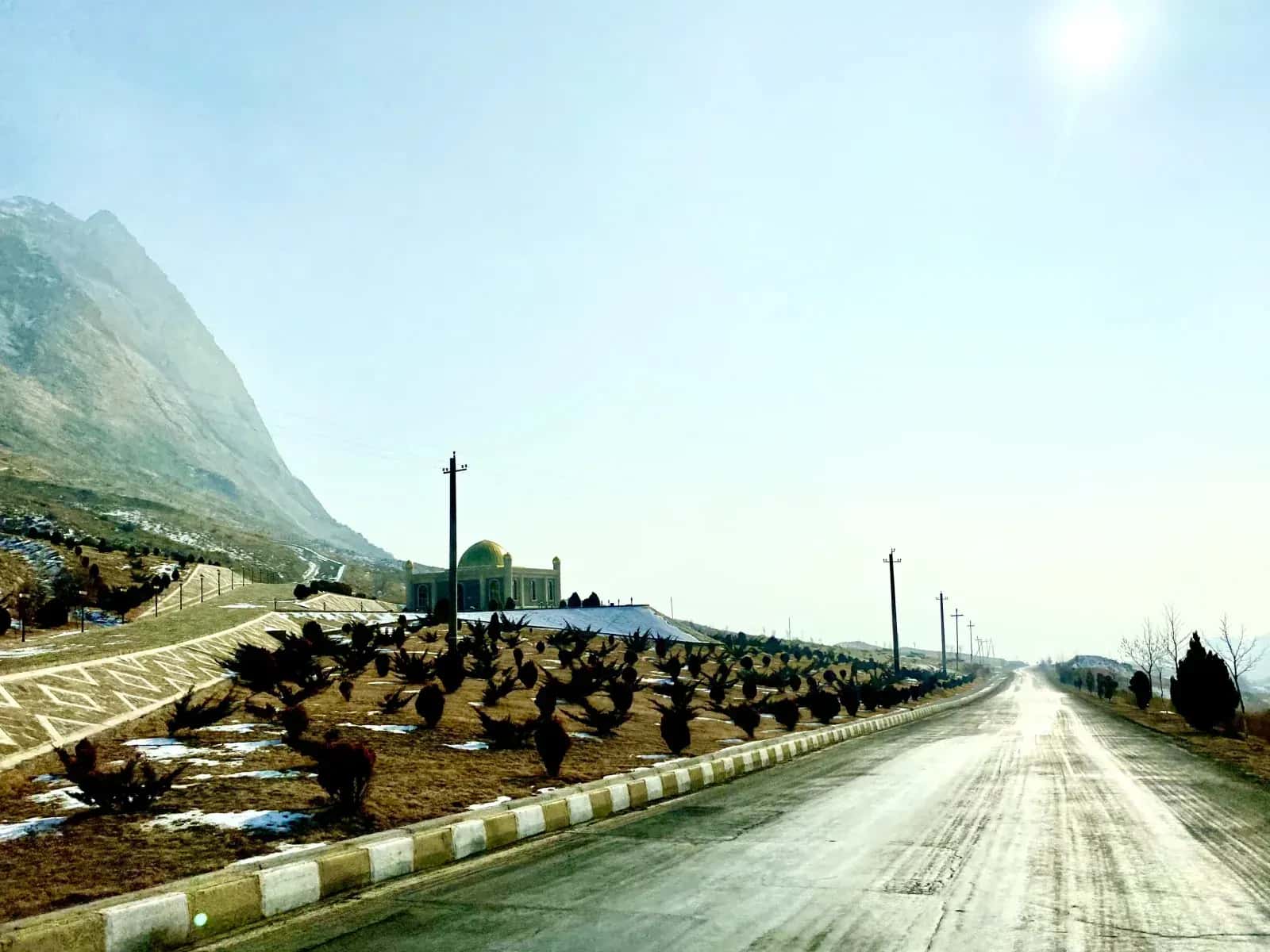
High in the Greater Caucasus, Khinalug is one of the highest continuously inhabited villages in the country. Reached by a dramatic mountain road, it offers sweeping views and a distinct local language and culture found nowhere else.
Khinalug has been lived in for a very long time, and its isolation high in the mountains helped preserve a language and way of life you won't encounter elsewhere. Stone houses cling to the slopes, woodsmoke drifts over the roofs, and the surrounding peaks are simply enormous. The road up is part of the adventure, scenic and slow, so treat Khinalug as a destination in its own right rather than a quick stop.
How to fit these into a trip
A few practical notes if you want to string these together:
- Gobustan (rock art and mud volcanoes) pairs well as a day trip from Baku. You can cover both in a single outing.
- Sheki and Lahij sit in the northwest and suit a regional loop, ideally with an overnight so you're not rushing the mountain roads.
- Khinalug needs a mountain drive, so allow extra time and, ideally, a night nearby.
The Flame Towers, the Caspian seafront, and Baku itself need no special planning. They're simply part of any stay in the capital.
When to go and how long to allow
Spring (roughly April to June) and autumn (roughly September to October) are generally the most comfortable seasons, with mild weather that suits both city walking and mountain drives. Summers are hot in and around Baku, and the high mountain roads to places like Khinalug are far more pleasant, and more reliably open, in the warmer months, so check current conditions before a late- or early-season attempt.
For time, plan around a week: a Baku base for Gobustan and the Flame Towers, plus a few days in the regions for Sheki, Lahij, and a mountain drive to Khinalug. If you only have a long weekend, focus on Baku and a single Gobustan day trip, and save the northwest for a return visit. For a ready-made route, see our 7-day Azerbaijan itinerary.
For the bigger picture of what makes the country special, read why travel to Azerbaijan, or browse the full Azerbaijan travel guide.
FAQ
What is Azerbaijan most famous for?
Azerbaijan is known for its mud volcanoes, the flame motif (from the Flame Towers to its ancient fire heritage), the Caspian Sea, and UNESCO sites like Gobustan's rock art and the Sheki Khan's Palace.
Can you see mud volcanoes near Baku?
Yes. The Gobustan area south of Baku is the most accessible place to see mud volcanoes, and it's commonly combined with the Gobustan rock art in a single day trip.
How many days do you need to see these sights?
Plan around a week: a Baku base for Gobustan and the Flame Towers, plus a few days in the regions for Sheki, Lahij, and a mountain drive to Khinalug.
Is Sheki worth the trip from Baku?
Yes. The Sheki Khan's Palace and its UNESCO-listed historic centre are among Azerbaijan's most distinctive sights, and the surrounding mountains make the journey scenic.
Are the mud volcanoes dangerous to visit?
No. Gobustan's mud volcanoes are cold rather than fiery (the bubbling is caused by underground gas, not heat) so you can walk right up to them. The main thing to plan for is the rough final stretch of track, which is why many visitors go with a driver or on a tour.
Do I need a car to reach Khinalug and Lahij?
Both sit up winding mountain roads, so having a vehicle (your own driver, a hired car, or a tour) makes them far easier to reach and enjoy than public transport does. Allow extra time for the drive, and treat each as a destination rather than a quick photo stop.
What's the best time of year to see all seven?
Late spring and early autumn are the sweet spot: comfortable in Baku for the city sights and warm enough that the high mountain roads to Khinalug are more reliably open. Summer works too but is hotter around the capital.
Which of these can I combine in one day?
Gobustan is the big one. Its rock art and mud volcanoes sit close together and are routinely seen on a single day trip from Baku, often alongside the Flame Towers and seafront back in the city that evening.
Want a route built around the sights you care about most? Message Pink Travel on WhatsApp with your dates and group size, and we'll put together a clear plan for Azerbaijan.