
·9 min read
What to eat in Azerbaijan: 14 dishes & where to try them
A food lover's guide to Azerbaijani cuisine, 14 essential dishes from plov and dolma to qutab and pakhlava, with where to try each.
Azerbaijani cuisine sits at a delicious crossroads, Persian, Turkic, Caucasian, and Middle Eastern influences all meeting at one table. It's generous, deeply seasonal, and built around saffron-scented rice, char-grilled meat, fresh herbs, and an unhurried tea ritual. Here are 14 dishes to seek out, where they shine, and how to eat your way across the country like a local.
1. Plov (pilaf)
The crown of the table: fragrant rice, often with saffron, cooked with meat, dried fruit, chestnuts, or herbs depending on the version. There are dozens of regional variations, from lamb-and-chestnut to a herb-and-fish plov. It's celebration food, so look for it at proper sit-down restaurants where it's given the time it deserves.
2. Dolma
Vine leaves or vegetables (peppers, tomatoes, aubergines) stuffed with spiced minced meat and herbs. It's comfort food across the country, best at a traditional restaurant or, if you're lucky enough to be invited, a home.
3. Kebab / shashlik
Skewers of marinated meat grilled over coals, lamb, beef, chicken, even quality minced lula kebab. Found everywhere, but especially good at countryside spots and mountain towns where grilling is a craft.
4. Qutab
Thin, folded flatbread cooked on a griddle and filled with herbs, pumpkin, or minced meat. Cheap, fast, and excellent, perfect as a street snack or a casual lunch, and usually the first thing we tell first-time visitors to try.
5. Piti
A slow-cooked lamb, chickpea, and potato soup baked in an individual clay pot, traditionally eaten in two stages (broth first, then the solids). This is the signature dish of Sheki, try it there for the real thing, ideally alongside a slice of the town's famous halva. See our Sheki Khan's Palace guide if you're heading north.
6. Dushbara
Tiny dumplings in a clear broth, often finished with vinegar and herbs. Delicate and warming; a great starter at traditional restaurants.
7. Lavangi
Chicken or fish stuffed with a rich walnut-and-onion paste, a specialty of the Lankaran region in the south. Seek it out at restaurants featuring southern Azerbaijani cooking.
8. Saj
A communal dish cooked on a domed metal griddle (the saj), piled with meat and vegetables and served sizzling at the table. Ideal for groups and a fun, shareable centerpiece.
9. Kufta (Kufta bozbash)
Large meatballs, sometimes with a surprise filling, served in a light broth with chickpeas and potato. Hearty, homey, and satisfying.
10. Badimjan (aubergine dishes)
Aubergine appears everywhere, from smoky purées to stuffed and grilled versions. A reliable, flavorful choice for vegetable lovers.
11. Pakhlava
Azerbaijani baklava: layers of pastry with nuts and syrup, often cut into diamonds and decorated. A holiday classic, buy it from a good sweet shop or bazaar.
12. Shakarbura
A sweet pastry filled with ground nuts and sugar, crimped into a half-moon shape, traditionally made for Novruz, the spring festival. Look for it at confectioners and markets.
13. Black tea & jam
Tea is the heartbeat of Azerbaijani hospitality, served strong in pear-shaped armudu glasses, usually with fruit jam and sweets. You'll find a teahouse (chaykhana) almost anywhere, sit, slow down, and enjoy it.
14. Fresh herbs & local cheese
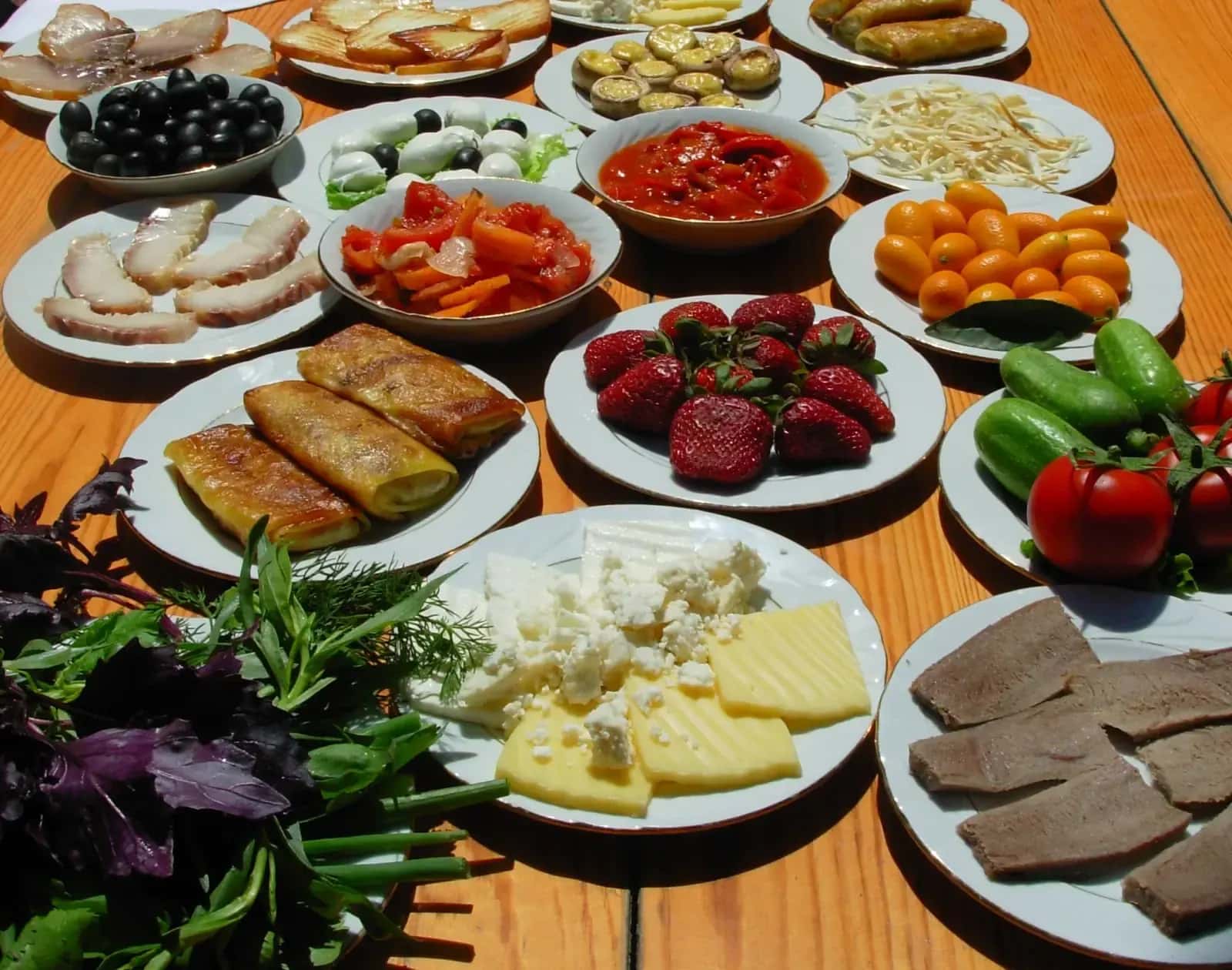
Every meal comes with a plate of fresh herbs, white cheese, and bread. Don't skip it, eating herbs by the handful is part of the local table, and it's wonderful.
How Azerbaijanis eat: the rhythm of the table
Meals here are unhurried and shared. Expect the table to fill before the mains even arrive: bread, a plate of fresh herbs (greens are eaten raw, by the handful), white cheese, pickles, and small cold starters. Dishes are meant for the middle of the table, not portioned onto individual plates, so ordering a few things to share is the natural way to eat.
Bread is close to sacred, flatbreads like tandir and lavash appear at every meal and are used to scoop, wrap, and mop. And nothing really ends until tea. A pot of strong black tea, poured into armudu glasses with jam and sweets, is both a welcome and a farewell.
Where to eat: bazaars, teahouses and restaurants
- Traditional restaurants are where the classics (plov, dolma, piti, kebabs) are done properly, often in atmospheric settings inside old caravanserais or courtyards.
- Bazaars and markets are the best crash course in local produce: pyramids of spices, dried fruit, walnuts, cheeses, and seasonal fruit. Baku's Teze Bazar is a good one to browse and snack through.
- Teahouses (chaykhana) are for slowing down, tea, backgammon, and sweets rather than full meals.
- Street and casual spots are where qutab, kebabs, and fresh bread shine, and where a full meal costs very little.
- A home invitation is the ultimate version of all of the above. If it happens, accept, Azerbaijani hospitality at a family table is unforgettable.
A sample food day in Baku
- Morning: tea and fresh bread, or a bakery pastry, to ease in.
- Lunch: hot-off-the-griddle qutab with greens, or a quick kebab wrap, fast, cheap, and delicious.
- Afternoon: a teahouse break with pakhlava and a pot of black tea.
- Evening: a proper sit-down dinner built around plov or grilled meats, with a spread of starters and herbs to share.
Regional specialties: eat this here
Azerbaijan's regions each have a signature. Chase piti (and halva) in Sheki, walnut-stuffed lavangi in the southern Lankaran region, the best char-grilled meats in the mountain towns, including the kebabs and mountain dishes of Karabakh, and standout sweets and produce across the west. Building a trip around these is one of the most rewarding ways to see the country, our reasons to travel Azerbaijan guide sketches how the regions connect.
Is Azerbaijani food halal-friendly?
Largely, yes. Azerbaijan is a Muslim-majority country and its cuisine is built around lamb, beef, chicken, and fish rather than pork, so most traditional dishes are naturally halal-friendly. Alcohol is available but never assumed. As always, if it matters to you, ask at the restaurant to confirm.
What to bring home
Edible souvenirs travel well: loose-leaf black tea, saffron, dried fruit and walnuts, jars of fruit jam, spice blends, and boxed sweets like pakhlava and shakarbura. Bazaars are the most characterful place to buy them, and a little friendly bargaining is part of the fun.
Prices and tipping
Eating well in Azerbaijan is easy on the budget: street food and casual meals cost very little, and even a generous sit-down dinner at a traditional restaurant is affordable by European standards. Tipping around 10% is a normal way to thank good service, though it's often not expected at the most casual spots.
Where to eat
Baku has the widest range, from classic restaurants to lively bazaars and teahouses. See why visit Baku for more on the city, or our eat and food experiences page to plan around them. Regionally, Sheki is the place for piti, the south for lavangi, and mountain towns for the best grilling.
FAQ
Is the food spicy?
Generally no. Azerbaijani cooking leans on herbs, saffron, dried fruit, and slow cooking rather than chili heat, so it's flavorful without being fiery.
Are there good vegetarian options?
Yes. Qutab with greens, dolma in vegetable form, aubergine dishes, fresh herbs, cheeses, and breads give vegetarians plenty to enjoy, though many mains are meat-based. Vegans should ask about butter and yogurt, which appear often.
What should I drink?
Black tea is the classic, served with jam and sweets. There's also excellent local mineral water, fresh sherbets, and a growing wine scene in the wine regions.
How much should I budget for food?
Very little for casual eating, street food and teahouses are cheap, while a full dinner at a good traditional restaurant remains affordable. It's one of the easiest places to eat well without overspending.
Where can I try the most dishes in one place?
Baku's traditional restaurants and bazaars offer the broadest range in a single trip. Our eat and food experiences page can help you plan around them.
Can you arrange food-focused experiences?
Yes, from market visits to regional specialties on a wider tour. Tell us your tastes and we'll build them in.
Hungry to taste your way across Azerbaijan? Message Pink Travel on WhatsApp and we'll weave the best food experiences into your trip.