
·9 min read
Vagif Mausoleum in Shusha and the return of Poetry Days
The Vagif Mausoleum on Shusha's Jidir Duzu, who Molla Panah Vagif was, why his tomb is a landmark, and how the Vagif Poetry Days festival returned.
On the edge of Shusha, where the plateau falls away toward the Jidir Duzu meadow, stands a tall white building of marble and stone. This is the mausoleum of Molla Panah Vagif, poet, statesman, and one of the defining voices of 18th-century Azerbaijani literature. It is both a monument to a single life and a symbol of how Shusha understands itself. For many travelers it becomes the emotional high point of a day in the city: a quiet building, a very long view, and a story that ties the two together.
This guide covers who Vagif was, what you actually see at the mausoleum, why the Vagif Poetry Days festival matters, and how to fold the site into an unhurried Shusha visit.
Who was Vagif
Molla Panah Vagif (1717–1797) rose from teacher to vizier of the Karabakh khanate under Ibrahim Khalil Khan. He is remembered less for politics than for poetry: he pulled Azerbaijani verse toward everyday life, realism, and folk rhythm, away from ornate abstraction. His lines are still quoted, and his name is attached to one of the country's most important cultural traditions.
That plainspoken style is a big part of why he still resonates. Where much court poetry of the era leaned on abstraction, Vagif wrote about love, beauty, and daily life in language people recognized, which helped carry his verse from the palace into popular memory. Living in Shusha at the height of the khanate placed him at the center of a city that was already becoming Karabakh's cultural heart, a connection the town has never let go of.
The mausoleum itself
The current mausoleum was raised in 1982 on the rocky height where Vagif died and was buried. It quickly became one of Shusha's landmark structures, a slim, vertical building that reads clearly against the mountain sky. Like much of Shusha, it suffered heavy damage in the decades that followed, and it has since been restored.
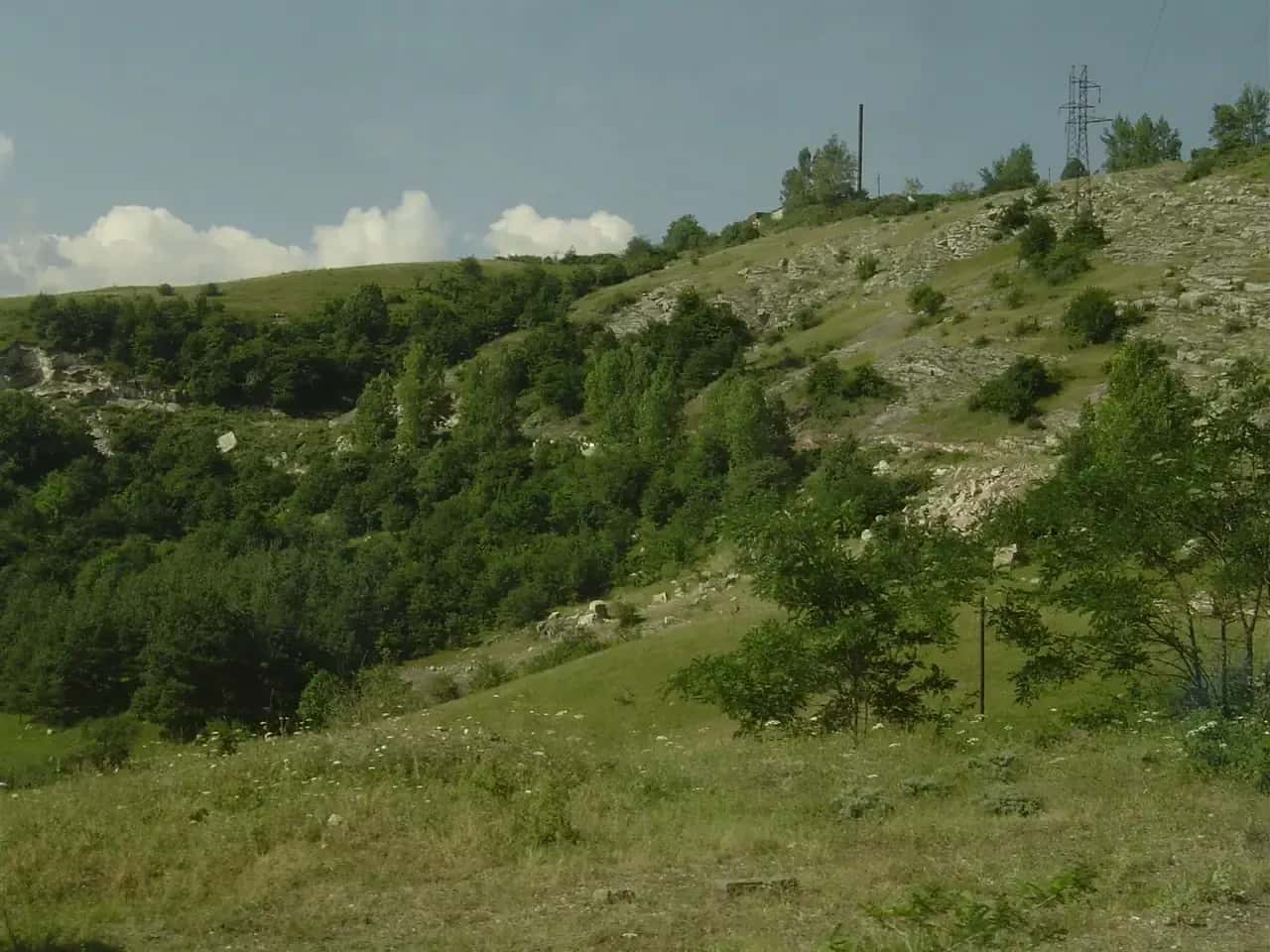
Its position matters. Standing beside it, travelers get one of the great views in Karabakh: the Jidir Duzu plain spreading below, the same ground tied to centuries of gatherings, horse races and festivals. The Jidir Düzü plateau and Topkhana forest sit right alongside, so the monument and the landscape read as a single experience rather than two separate stops.
Give the site a little time rather than a quick photo. The building is compact, but the setting rewards standing still, orienting yourself against the mountains, picking out the plain below, and understanding why this exact spot was chosen. It is one of the places where Shusha's geography and its poetry line up in the same frame.
Vagif Poetry Days
Vagif's name lives on in the Vagif Poetry Days, a festival that began in Shusha in the 1980s and gathered poets from across the country. After decades of interruption, the festival returned to Shusha, marking one of the clearest signals that cultural life in the city was being revived rather than simply rebuilt.
For a traveler, this is the useful point: Shusha is not being treated as a museum of the past. It is being switched back on. The city's deeper claim to be the cradle of Azerbaijani music runs in the same direction, our Shusha music heritage guide traces how mugham and a long line of composers grew out of these same streets and plateaus.
Why it matters
Shusha carries a weight in Azerbaijani culture that is hard to overstate, and the Vagif Mausoleum is one of the most concentrated expressions of it. The city is widely recognized as a cultural capital (a place associated with poetry, music, and craft rather than a single sight) and Vagif is one of the names that anchors that reputation. Visiting the mausoleum is less about the architecture of one building and more about standing where a whole cultural tradition points. That is the value it offers a traveler willing to slow down.
How it fits a Shusha visit
The mausoleum pairs naturally with the Jidir Duzu viewpoint and the Shusha Fortress, and it sits within the same unhurried day as the city's other cultural sights, including the bullet-scarred busts of Shusha's poets and musicians. Most travelers can see the mausoleum, the plateau, the fortress walls, and the city center comfortably in one day at a relaxed pace. For how to give the city the time it deserves, read how to plan Shusha travel.
Practical planning
A few general notes to set expectations, treat the specifics as flexible and confirm current details when you book.
- When to go. Shusha sits high in the Karabakh uplands, so late spring through early autumn is the most comfortable window, with mild days and long views. It has long been thought of as a summer city for exactly this reason. For a fuller seasonal picture, see the best time to visit Karabakh.
- How to get there. Shusha is a long drive west of Baku, best treated as a full travel day rather than a quick hop, and the region is visited through an organized system rather than as a spontaneous road trip. Our Baku to Shusha guide walks through the route and how the trip works in practice.
- How long to allow. Plan a relaxed half to full day for Shusha's cultural core; the mausoleum itself is a short stop, but the plateau invites lingering.
- What to bring. Comfortable shoes for uneven ground, a layer for the mountain air even in summer, water, and sun protection on the exposed plateau.
For how the mausoleum sits within a longer Karabakh trip, our Karabakh 3-day itinerary and the Shusha city guide show how the pieces connect.
Which official signals support this
- the Ministry of Culture document confirms Shusha's status as the cultural capital of Azerbaijan
FAQ
Who was Molla Panah Vagif?
An 18th-century Azerbaijani poet who also served as vizier of the Karabakh khanate. He is known for bringing realism and folk style into Azerbaijani poetry, and Shusha treats him as one of its defining cultural figures.
When was the Vagif Mausoleum built?
The current mausoleum was erected in 1982 on the site where Vagif was buried in Shusha. It was later damaged and has since been restored.
What are the Vagif Poetry Days?
A poetry festival named after Vagif that began in Shusha and drew writers from across Azerbaijan. Its return to the city is seen as a marker of Shusha's cultural revival.
Is the mausoleum easy to combine with other sights?
Yes. It sits beside the Jidir Duzu viewpoint and is within a short distance of the fortress and the city center, so it fits comfortably into a single Shusha day.
How much time should I spend at the mausoleum?
The building itself is a short stop, but the setting deserves more. Allow time to take in the Jidir Duzu view and pair it with the fortress and the city's other cultural sights, and the mausoleum becomes part of a fuller half- to full-day in Shusha.
What is the best time of year to visit?
Late spring through early autumn is the most comfortable, with mild weather and clear mountain views. Shusha's highland setting keeps summers pleasant, which is one reason it has long been thought of as a summer city. See the best time to visit Karabakh for more.
Why is the mausoleum considered so important?
Beyond honoring one poet, it stands for Shusha's identity as a cultural capital, a city of poetry and music. That is why its restoration and the return of the Vagif Poetry Days are read as signs of the city's revival, not just repairs to a single monument.
Planning a trip built around Shusha's cultural landmarks? Message Pink Travel on WhatsApp with your dates, and we'll shape a route around them. Explore our Karabakh tours or reach out via our contact page.
Plan Your Karabakh Trip
The main Karabakh planning pages in one place
The hub, tours page, Shusha page, and key guides are grouped together so readers can build context before making a travel decision.
For a long time, Karabakh was mostly known from a distance. Now Shusha, changing access rules, and rebuilding tourism infrastructure are turning it into a destination people can plan with more intention.
Shusha-led routes of one to three days, your entry permit filed for you, and a firm per-person price before you commit to anything.
Why the official Karabakh permit portal won't work for you