
·9 min read
Shusha Fortress: how a mountain city became Karabakh's stronghold
The history of Shusha Fortress, founded by Panahali Khan in the 18th century as seat of the Karabakh khanate. What survives today and how to visit.
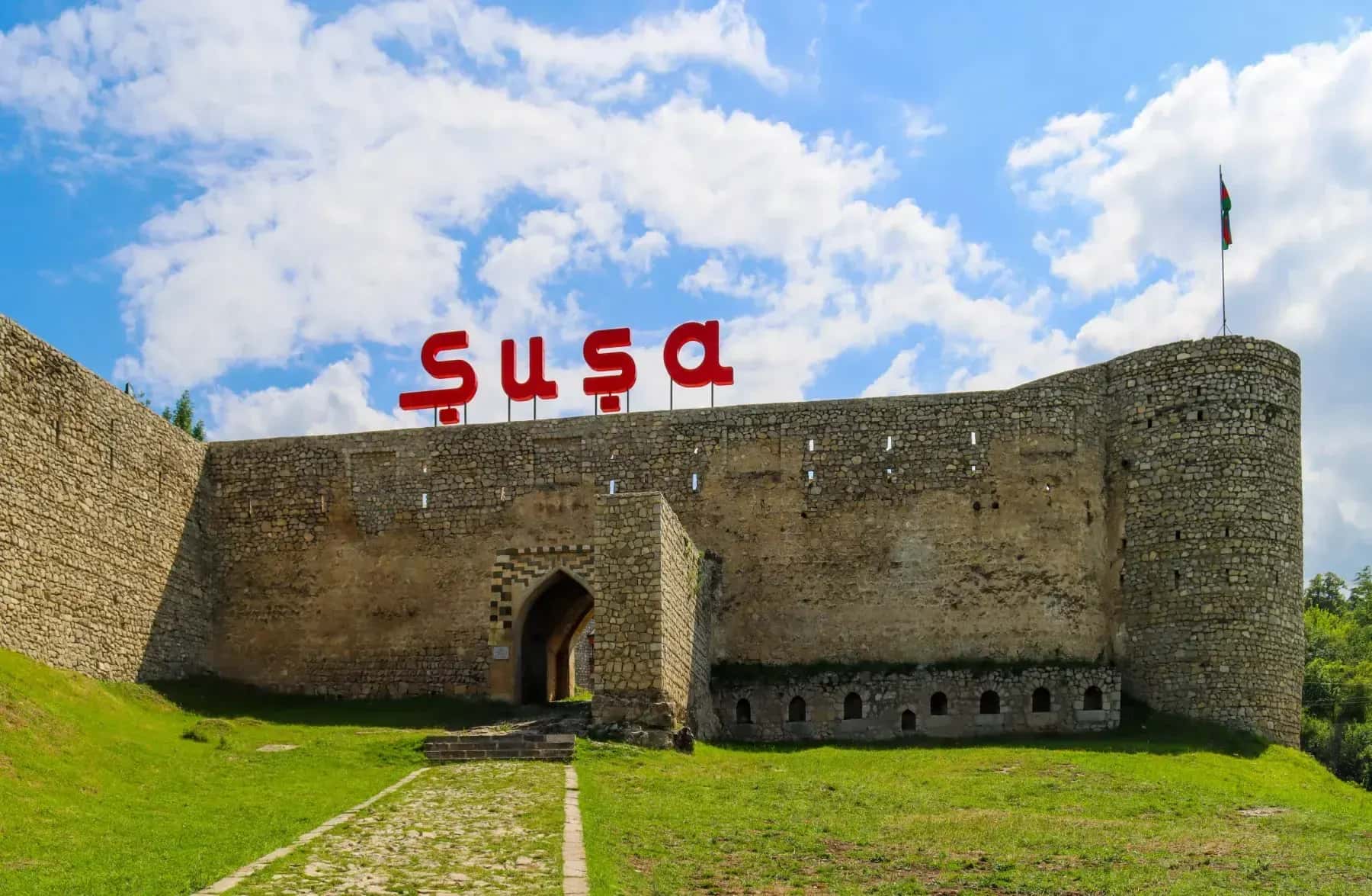
Shusha exists because of its geography. Set on a rocky plateau ringed by cliffs and forest, it was chosen precisely because it was hard to reach and easy to defend. The fortress that grew around it is not a single castle but a whole fortified town, and understanding it is the fastest way to understand why this city sits at the heart of Karabakh's story.
Most visitors picture a "fortress" as one keep with a moat. Shusha is different: the walls wrap an entire living town of mosques, mansions, and squares, and the sights people travel for all sit inside them. Read the walls first and the rest of the city falls into place.
Why the city was founded here
In the mid-18th century, Panahali Khan Javanshir, founder of the Karabakh khanate, needed a secure capital. He selected this mountain site, first called Panahabad after him, because its natural defenses made it almost impossible to storm. The location let the khanate consolidate power, and the safety it offered allowed a real city to develop: mosques, mansions, markets, and eventually the cultural life that made Shusha famous.
The geography did the heavy lifting. The plateau sits high in the forested uplands of Karabakh, with sheer drops on several sides and a single, controllable approach, the kind of terrain that lets a small garrison hold off a much larger force. That defensive logic is why a capital rose here rather than in the open lowlands, and why the city's character has always been bound up with its walls.
Reading the walls and gates
The fortress is defined by its stone walls and its gates, the best known being the Ganja Gate. These were not decoration; they controlled who entered a city built on the logic of protection. Walking the surviving walls, you can still feel that logic, the way the town turns its back to the cliffs and watches the approaches.
The Ganja Gate faced the road toward Ganja, the direction most traffic and any threat would come from, which is why it grew into the grandest and most recognizable of the entrances. The wall system as a whole strings together stretches of stone rampart, bastions, and gates that once let the khan's men see and screen everyone arriving. Even where the masonry is worn or under repair, the line of the defenses still traces the shape of the old town clearly on the ground.
For travelers, the walls are the frame. Inside them sit the sights most people come for: the Govhar Agha mosque, the Vagif Mausoleum, the Natavan house, and the panoramic edge above Jidir Duzu.
Inside the walls: what to see
Once you are through the gates, a walk across Shusha links most of its landmarks in a single loop:
- Govhar Agha Mosque, the city's principal historic mosque, named for the Karabakh noblewoman who endowed it, with its twin minarets among the most photographed sights in town.
- Vagif Mausoleum, the resting place of Molla Panah Vagif, the 18th-century poet and statesman who served the khanate. Our guide to the Vagif Mausoleum explains why it matters to Azerbaijani literary heritage.
- The Natavan house, associated with Khurshidbanu Natavan, the poet and daughter of a Karabakh khan, a reminder of how central poetry and music were to Shusha's identity.
- Jidir Duzu, the broad flat "racing ground" on the plateau's edge, famous for its sweeping views over the surrounding gorges and historically used for horse events and gatherings. See Jidir Duzu and Topkhana for more on this open ground and the forest beside it.
Shusha's reputation as a cradle of Azerbaijani music runs through all of it. This is the city long associated with mugham, the classical vocal tradition, and generations of singers and composers. The mansions and mosques you pass on foot are the physical backdrop to that cultural story.
What survives and what has been restored
Shusha carried heavy damage from the decades it spent outside Azerbaijani control. Since 2020, restoration has moved steadily, walls, gates, mosques and mansions are being brought back, and the city has been given a formal cultural role rather than being left as ruins. The result is a place where medieval defensive stone, 18th- and 19th-century architecture, and active reconstruction all sit side by side.
Practically, that means the townscape changes from year to year: a building fenced off for works on one visit may be open on the next. It also means you will often see old stone and fresh restoration in the same view, part of what makes walking Shusha feel less like touring a finished museum and more like watching a city come back.
How to see the fortress on a trip
The fortress is best understood on foot, woven through a full Shusha day rather than treated as one ticketed stop. Pair it with the Vagif Mausoleum and the Jidir Duzu viewpoint, and read why Karabakh matters as a destination now for the wider frame. To see how it fits a multi-day route, use the 3-day Karabakh itinerary.
A few practical notes to make the walk better:
- Wear proper shoes. The plateau is stony and uneven, with cobbles, slopes, and worked areas, so comfortable footwear with grip matters more here than in a flat old town.
- Mind the altitude and weather. Shusha sits high in the mountains, so it runs noticeably cooler than the lowlands and can be breezy even when Baku is warm. Bring a layer, and expect quicker weather changes than on the coast.
- Give it half a day at least. Reading the walls, seeing the main mosque and mausoleum, and standing at Jidir Duzu is not a rushed hour; a relaxed half-day lets the history land.
- Bring water and sun cover. Shade is limited on the open stretches of wall and at the viewpoint.
For help sequencing everything into a workable plan, see our guide on how to plan a Shusha trip.
Which official signals support this
- the presidential program document treats restoration and tourism in the region as a development priority
FAQ
Who founded Shusha Fortress?
Panahali Khan Javanshir, founder of the Karabakh khanate, established the fortified city in the mid-18th century. It was first named Panahabad after him.
Why was this location chosen?
The rocky plateau, ringed by cliffs and forest, was naturally defensible and hard to attack. That security let the khanate build a lasting capital and a rich cultural city.
What is the Ganja Gate?
It is the best-known of Shusha's fortress gates, part of the wall system that controlled access to the city. It is one of the recognizable landmarks of the old town.
Can visitors walk the fortress today?
Yes, the walls and old town are explored on foot as part of a Shusha visit.
How long do you need for the fortress and old town?
Plan for at least half a day on foot to take in the walls, the Ganja Gate, the Govhar Agha mosque, the Vagif Mausoleum, and the Jidir Duzu viewpoint without rushing. If Shusha is one stop on a wider regional route, our 3-day Karabakh itinerary shows how it fits.
Is it a single castle or a whole town?
A whole fortified town. The walls and gates enclose an entire historic city of mosques, mansions, and squares rather than one keep, which is why it is explored as a walk rather than a single ticketed monument.
What else is worth seeing inside the walls?
Beyond the fortifications themselves, the highlights include the Govhar Agha mosque with its twin minarets, the Vagif Mausoleum, houses tied to Shusha's poets and musicians, and the open ground at Jidir Duzu on the plateau's edge. The city is also historically known as a home of mugham, Azerbaijan's classical music tradition.
What should I wear and bring?
Comfortable, grippy shoes for uneven stone, plus a warm layer, Shusha's mountain setting is cooler and breezier than Baku. Water and sun cover help on the open, low-shade stretches of wall and at the viewpoint.
Want to walk Shusha's walls with the history explained as you go? Message Pink Travel on WhatsApp with your dates. Start with our Karabakh tours or reach out via our contact page.
Plan Your Karabakh Trip
The main Karabakh planning pages in one place
The hub, tours page, Shusha page, and key guides are grouped together so readers can build context before making a travel decision.
For a long time, Karabakh was mostly known from a distance. Now Shusha, changing access rules, and rebuilding tourism infrastructure are turning it into a destination people can plan with more intention.
Shusha-led routes of one to three days, your entry permit filed for you, and a firm per-person price before you commit to anything.
Why the official Karabakh permit portal won't work for you