
·9 min read
Khankendi today: the administrative heart of Karabakh
A guide to Khankendi, the largest city of the Karabakh region today. Its setting below Shusha, its role in the region's future, and how to understand it.
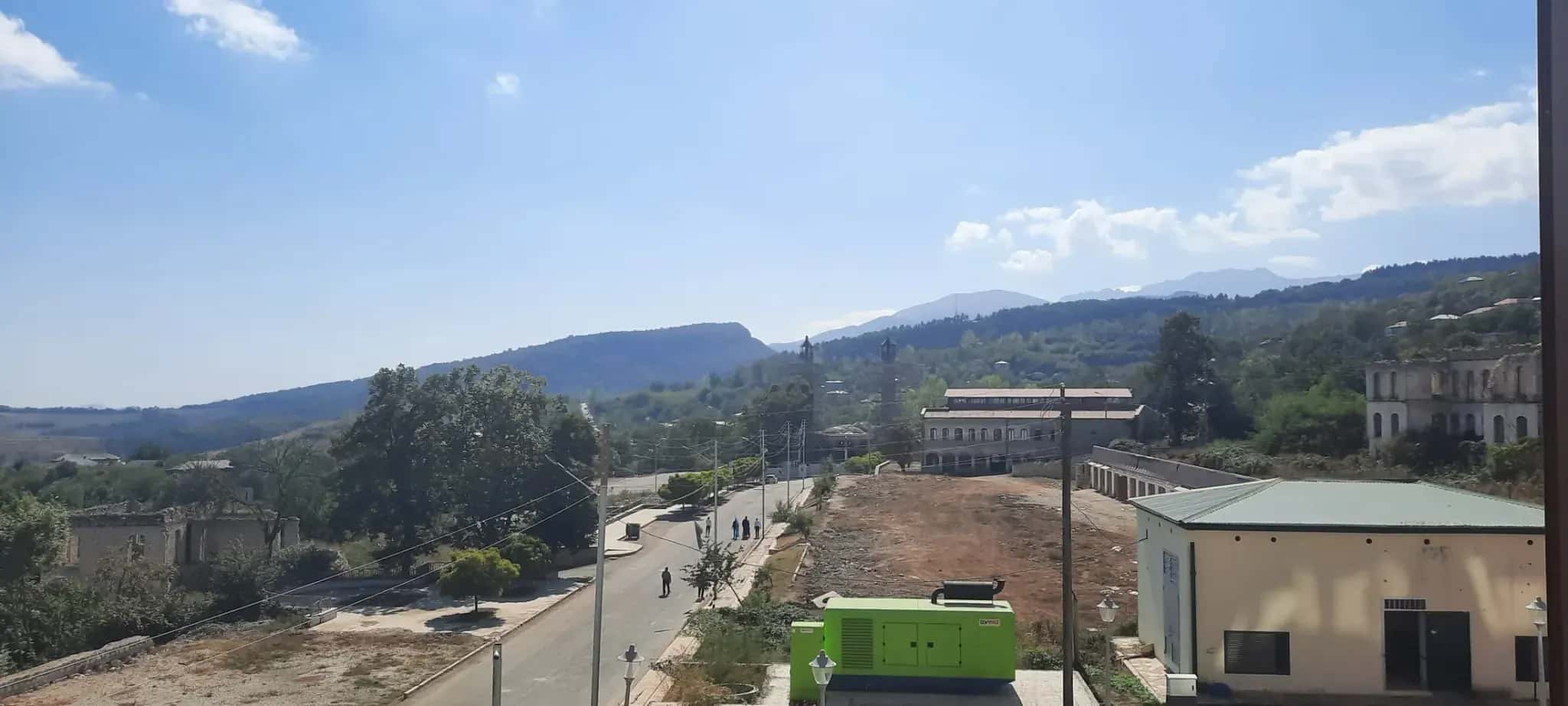
Below the heights of Shusha, in a bowl of the Karabakh mountains, sits Khankendi, the region's largest city and its administrative center today. For a traveler trying to read modern Karabakh, Khankendi is an important piece of the picture: it is where the region's present-day life and future planning are increasingly concentrated.
Most travelers meet Khankendi not as a monument circuit but as context, the working city that sits below Shusha's cultural high notes and helps the whole region make sense. Understand the pairing of the two, and the rest of a Karabakh trip falls into place.
Where Khankendi sits
Khankendi lies in a valley setting a short distance below Shusha, and the relationship between the two is part of understanding the region. Shusha carries the historical and cultural weight from its mountain perch; Khankendi sits lower, larger, and more oriented toward administration and everyday urban life. Seeing them together makes the region's structure legible.
Geographically, this is the highland heart of Karabakh: forested slopes, cool mountain air, and rivers running down toward the plain. The city sits in a natural amphitheatre of hills, which is why the two towns feel so linked, Shusha looks down from its cliffs, Khankendi spreads across the valley floor below. That short vertical distance, mountain fortress above and valley city below, is the piece of geography that ties the pair together. On the lowland plain further east lies Aghdam, so a mountain-and-plain loop naturally strings these places together.
A little history
The name Khankendi is usually read as "the khan's village," a nod to its origins connected to the Karabakh khanate that also raised Shusha in the 18th century. It grew from a modest settlement in the mountains into the largest town of the highland part of the region over the following centuries, a story of a small place becoming a regional center, which is roughly the arc it is on again today.
For a traveler, the useful takeaway is that Khankendi has almost always been the practical, everyday counterpart to Shusha's cultural grandeur. Where Shusha gave Karabakh its poets, its carpet-weaving traditions, and its mugham music, Khankendi has tended to be the place where ordinary regional life (work, services, administration) actually happened. Holding both roles in your head is the key to reading the two cities as a pair.
The city's role today
Khankendi is being positioned as an administrative and functional hub for Karabakh as the region is reintegrated and rebuilt. That gives the city a forward-looking character, less about monuments, more about institutions, services and the mechanics of a region coming back to life. For travelers, it is context rather than a checklist of sights: the working center around which the cultural highlights orbit.
This is the same story of recovery playing out across Karabakh, just in a different key. Where Aghdam shows the scale of what was lost and the raw work of rebuilding from ruins, and Shusha shows the region restored as a cultural showcase, Khankendi shows the administrative machinery, the offices, utilities and everyday urban life a region needs to function. Seeing the three together gives you the fullest picture of what Karabakh's revival actually involves.
How to read it as a visitor
The most useful way to approach Khankendi is as the counterpoint to Shusha. One is the cultural capital; the other is the administrative center. Understanding that division clarifies the whole region, the same way understanding Aghdam clarifies its recovery and Shusha clarifies its heart.
Come expecting a city in motion rather than a finished set of sights. The interest here is in the setting, the mountain bowl, the closeness to Shusha, the sense of a regional center finding its feet again, more than in a list of individual attractions. Travelers who enjoy Khankendi tend to be the ones curious about how a whole region works and recovers, not just about ticking off monuments.
How to fit it into a trip
Khankendi is best understood in relation to Shusha and the surrounding region rather than as a standalone destination. For the wider frame, read why Karabakh matters as a destination now.
Because the point of Khankendi is its relationship to Shusha, the natural way to see it is on a wider mountain-and-plain loop rather than a trip of its own. Most itineraries lead with Shusha as the cultural centre, read Khankendi in the valley below, and add a plain-country stop like Aghdam for contrast. Our sample 3-day Karabakh itinerary shows one way to string the stops together, and how to plan a Shusha trip sets out the logic of building a route around the mountain towns.
Planning a visit: season, time and what to bring
The practicalities here are the same as for a wider Karabakh trip, because Khankendi sits inside the mountain landscape rather than off on its own. The mildest, clearest conditions come in spring and early autumn, the same shoulder seasons that suit the whole region. Summers in the highlands are pleasanter than on the hot lowland plain, while winters in the mountains are cold and can bring snow. Our guide to the best time to visit Karabakh breaks the seasons down if you are planning the route as a whole.
Since Khankendi is context more than a checklist, most travelers pass through or pause briefly rather than dedicating a full day to it, folding it into a day that also takes in Shusha above. This is mountain country, so pack layers, a light rain jacket, sun protection, and comfortable closed shoes whatever the month, highland weather shifts quickly, and cool evenings follow warm afternoons even in summer. Before you lock in any details, always confirm the current access framework for the region, as we cover in the FAQ below.
Which official signals support this
- the presidential program document treats regional administration and development as priorities
FAQ
What is Khankendi?
Khankendi is the largest city and administrative center of the Karabakh region today, set in a mountain valley a short distance below Shusha.
How is it different from Shusha?
Shusha is the historical and cultural capital on its mountain height; Khankendi sits lower and larger, oriented toward administration and everyday urban life. Together they show the region's structure.
Is Khankendi a tourist destination?
It is more context than checklist, the working center of the region rather than a monument circuit. It is best understood alongside Shusha and the wider area.
What does the name Khankendi mean?
It is generally understood as "the khan's village," a reference to its origins connected to the Karabakh khanate, the same historical setting that produced nearby Shusha in the 18th century.
How does Khankendi fit into the story of Karabakh's recovery?
It is the administrative and everyday-life piece of the picture. Aghdam shows the scale of what was destroyed and the work of rebuilding, Shusha shows the region restored as a cultural showcase, and Khankendi shows the working city and institutions a recovering region needs, which is why seeing the three together is so useful.
When is the best time to see the region around Khankendi?
Spring and early autumn are the most comfortable in the Karabakh mountains, with mild, clear conditions. The highlands stay cooler than the lowland plain in summer, and winters can be cold and snowy. See our best time to visit Karabakh guide for the full breakdown.
How long should I spend in Khankendi?
Usually a brief stop rather than a full day. Because its interest is mainly as context and setting, most travelers pause there while building a day around Shusha and the wider mountain landscape.
Can I visit?
Access to Karabakh runs through an official framework.
Want the full picture of modern Karabakh? Message Pink Travel on WhatsApp with your dates. Explore our Karabakh tours or reach out via our contact page.
Plan Your Karabakh Trip
The main Karabakh planning pages in one place
The hub, tours page, Shusha page, and key guides are grouped together so readers can build context before making a travel decision.
For a long time, Karabakh was mostly known from a distance. Now Shusha, changing access rules, and rebuilding tourism infrastructure are turning it into a destination people can plan with more intention.
Shusha-led routes of one to three days, your entry permit filed for you, and a firm per-person price before you commit to anything.
Why the official Karabakh permit portal won't work for you