
·8 min read
Karabakh access rules: what to check before planning a trip
The official Karabakh access framework explained: why the official portal is resident-only, and how foreign passport holders actually arrange access.
When planning a Karabakh trip, the first question should not be the route. It should be access. Checking the official framework before fixing dates improves both logistics and the quality of the inquiry. This guide walks through where to verify the rules, how the process differs for foreign passport holders, and the general planning details (season, timing, what to expect on the ground) that make the rest of the trip easier to shape.
Start with the official rule, not assumptions
The safest approach is to rely on official Azerbaijani sources only. This is not a topic where older posts, screenshots, or general assumptions are good enough. Because the picture has changed over time, anything you read second-hand may already be out of date, so the habit worth building is to confirm the current framework directly before you commit to dates.
Why the 23 July 2025 update matters
The official update states that travel opportunities to the liberated territories were expanded for foreign citizens. That is one of the clearest signals that Karabakh is becoming easier to plan in a more practical way.
That does not mean every detail should be guessed. It means planning can now start from a clearer official framework.
Why the official portal matters
The official travel flow points travelers toward the official portal for travel to the liberated territories. It is important to understand what it is, and who it is for. The portal verifies identity through ASAN Login, Azerbaijan's national e-ID, which expects an Azerbaijani or CIS ID card. In other words, it is built for residents.
A note for foreign passport holders
If you hold a foreign passport, this is the part to read carefully. Because the portal signs you in through ASAN Login, there is no way for a foreign traveler to complete the request there, the system simply has no "foreign passport" path. That is not a ban on foreigners; Karabakh is open to visitors. It only means the official portal is not the route a foreign tourist uses.
Instead, the access request is filed on your behalf through the correct local channel. That is what Karabakh permit assistance for foreigners is for: you send your passport details and dates, the request is submitted, and you travel independently, no ASAN app, no local ID, and no obligation to book a guided tour.
What to do in practice
- confirm the current official framework from Azerbaijani sources only
- if you hold a foreign passport, arrange access rather than expecting to use the resident portal
- decide whether the trip is Shusha-led or part of a wider Karabakh route
- then send your dates and group size
That sequence makes it much easier for Pink Travel to return with a realistic and better-shaped plan.
What Pink Travel does at this stage
Pink Travel does not replace the official framework. It works within it. For foreign travelers, that means handling the Karabakh access request for you, then shaping route rhythm, stop selection, and logistics around it. That makes planning faster and cleaner, whether you travel on your own or with a guide.
Where Karabakh sits, and what it's known for
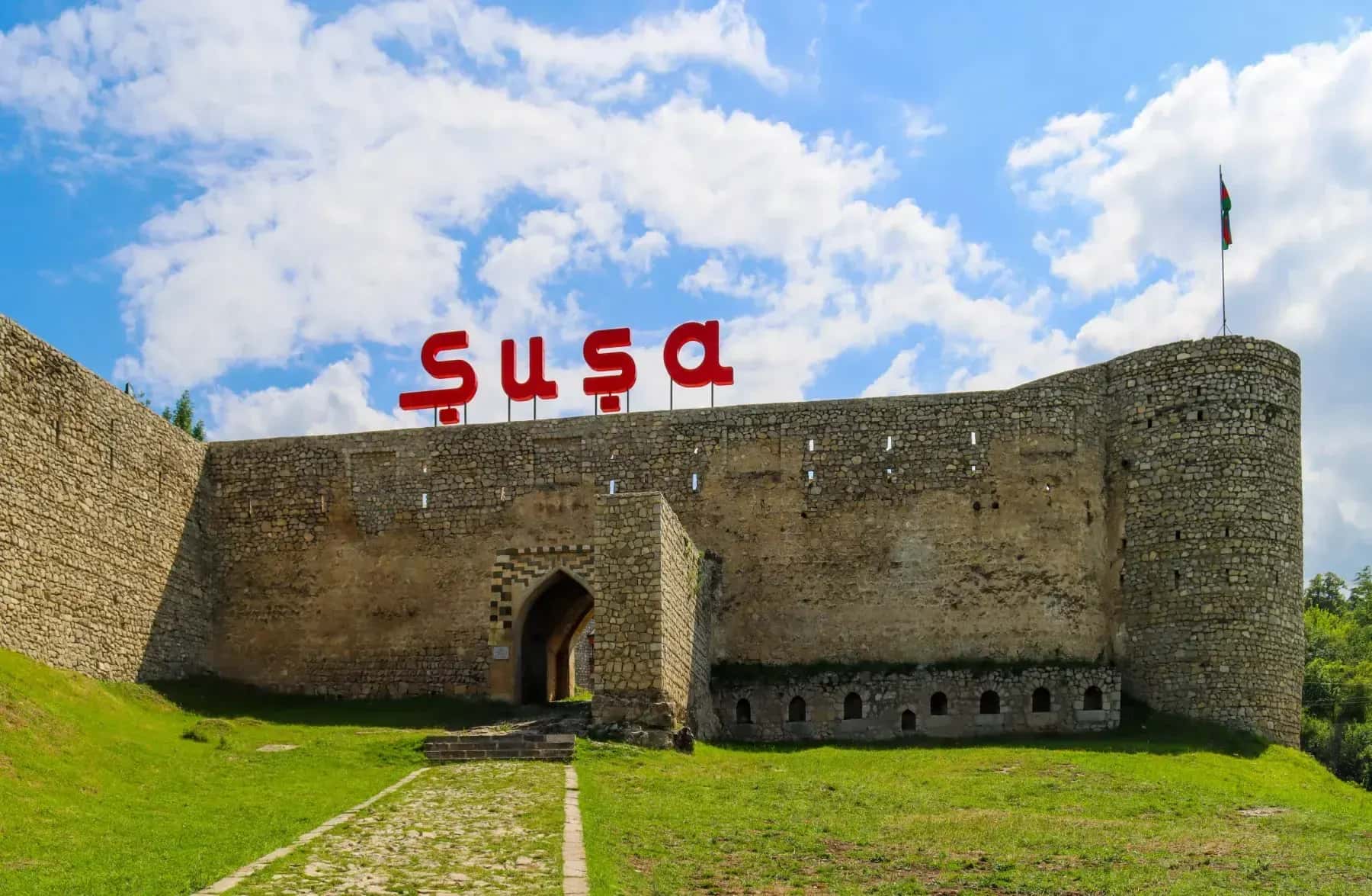
A little geography helps the planning make sense. Karabakh is a highland region in the western part of Azerbaijan, a landscape of forested ridges, river valleys, and mountain plateaus that rise well above the lowlands around Baku. Its cultural heart is Shusha, a historic fortress town set high on a plateau that has long been associated with Azerbaijani music, poetry, and craft, home to generations of mugham singers and a walled old town that earned it the nickname of a mountain conservatory. Around it lie other well-known names: Khankendi in the valley below, Aghdam to the north, and Lachin on the mountain road west.
The region's reputation rests on more than scenery. Karabakh gives its name to the Karabakh carpet, one of the great regional schools of Azerbaijani weaving, and to the Karabakh horse, a distinctive golden-chestnut mountain breed that is a national symbol. If you want the cultural backdrop before you travel, our guide to why Karabakh matters now sets the scene, and the Karabakh carpet heritage and Karabakh horse heritage pieces go deeper on the crafts and traditions the region is named for.
Best season and how long to plan for
Karabakh is a mountain region, so altitude shapes the calendar more than the coastal weather does. In general terms, late spring through early autumn is the most comfortable window for highland travel: the passes are clear, the days are long, and the landscape is at its greenest. Summer is warm but rarely as hot as the lowlands thanks to the elevation, while the shoulder seasons bring cooler, changeable mountain weather. For a fuller breakdown, see our guide to the best time to visit Karabakh.
For length, most travelers find that a focused Shusha-led trip works over a couple of days, while a wider Karabakh route taking in more of the region rewards three days or more. Our 3-day Karabakh itinerary shows one way to pace it, and if the trip centers on the fortress town, the guide on how to plan Shusha travel covers the details.
What to bring for a mountain trip
Nothing here is exotic. It's the usual highland packing list. Bring layers, since mountain mornings and evenings run cooler than the middle of the day, and comfortable shoes with grip for the fortress streets and uneven ground of Shusha's old town. Add sun protection and a refillable water bottle for the higher, more exposed stretches, and a light rain layer for the shoulder seasons when mountain weather changes quickly. Keep a copy of your passport and travel details handy, as you would anywhere. Karabakh is also a natural continuation of a wider trip. Many visitors reach it after time in the capital, so our reasons to visit Baku guide is a useful companion for the first half of the journey.
What to do in practice, again, the short version
- Verify the current official framework from Azerbaijani sources only.
- If you hold a foreign passport, arrange access instead of expecting the resident portal to work.
- Choose whether the trip is Shusha-led or a wider Karabakh route.
- Pick a season and rough length that fit.
- Send your dates and group size.
The best next step is either the 3-day Karabakh itinerary or the guide on how to plan Shusha travel. For the broader regional picture, our Karabakh overview ties the destinations together.
FAQ
What should I check first when planning a Karabakh trip?
Access, not the route. Confirm the current official framework before fixing dates, because that improves both the logistics and the quality of your inquiry.
Can foreign tourists use the official portal?
No. The official portal verifies identity through ASAN Login, Azerbaijan's national e-ID for residents, so a foreign passport holder cannot sign in. Karabakh is still open to visitors, the access request is simply arranged for you through the correct channel. See Karabakh permit assistance for foreigners.
Where do I verify the current access rules?
Use the official Azerbaijani sources only: the Karabakh page and the system. Older posts and screenshots are not reliable here.
Does the 23 July 2025 update mean every detail is settled?
No. The official update shows travel opportunities for foreign citizens were expanded, which means planning can start from a clearer framework, not that details should be guessed.
What's the right sequence before sending an inquiry?
Check the official access framework, decide whether the trip is Shusha-led or a wider Karabakh route, then send dates and group size. See our Karabakh overview for context.
When is the best time of year to plan a Karabakh trip?
Because Karabakh is a highland region, altitude matters more than the coastal weather. In general terms, late spring through early autumn is the most comfortable window for mountain travel, with the shoulder seasons cooler and more changeable. Our best time to visit Karabakh guide breaks it down further.
How many days should I set aside?
A focused, Shusha-led trip works over a couple of days, while a wider route through more of the region rewards three days or more. See the 3-day Karabakh itinerary for one way to pace it.
What should I pack?
Treat it as a mountain trip: layers for cool mornings and evenings, comfortable shoes with grip for Shusha's old streets, sun protection, water, and a light rain layer in the shoulder seasons. Keep a copy of your passport and travel details with you, as you would anywhere.
Is Karabakh worth combining with the rest of Azerbaijan?
Yes. Many visitors reach it as part of a longer trip that starts in the capital. If you're building the wider journey, reasons to visit Baku covers the first half, and the Karabakh overview helps you slot the region in.
Want help shaping a Karabakh trip around the official framework? Message Pink Travel on WhatsApp with your dates and group size, or reach out via our contact page, and we'll return with a realistic, well-paced plan.
Plan Your Karabakh Trip
The main Karabakh planning pages in one place
The hub, tours page, Shusha page, and key guides are grouped together so readers can build context before making a travel decision.
For a long time, Karabakh was mostly known from a distance. Now Shusha, changing access rules, and rebuilding tourism infrastructure are turning it into a destination people can plan with more intention.
Shusha-led routes of one to three days, your entry permit filed for you, and a firm per-person price before you commit to anything.
Why the official Karabakh permit portal won't work for you