
·9 min read
Baku: Where East Meets West, A 2026 Cultural Guide
How Baku blends Eastern tradition with Western modernity, the medieval Old City beside the Flame Towers, fusion cuisine, and the Caspian seafront.
Baku is where East meets West because it sits on the literal crossroads of Europe and Asia: a UNESCO-listed medieval Old City stands minutes from Zaha Hadid's flowing curves and the Flame Towers, and that fusion runs through its architecture, food, and everyday life along the Caspian shore. Few capitals hold two eras this close together, and the pleasure of Baku is watching them touch, a call to prayer near a glass tower, a carpet workshop beside a boutique. This guide walks through where that blend shows up, and how to plan a couple of days around it.
A cultural crossroads
Baku has long been a meeting point between Europe and Asia. Its history along the Silk Road and, later, the oil trade shaped a city where Eastern and Western influences sit side by side. Caravans once passed through this stretch of the Caspian coast, and by the turn of the 20th century an oil boom pulled in engineers, architects, and money from across Europe, which is why grand mansions from that era still line the streets just outside the old walls. You can read that story in the skyline, taste it in the food, and feel it in the rhythm of daily life. For a fuller picture of the city, see our guide on why visit Baku.
Architecture: ancient stone, modern glass
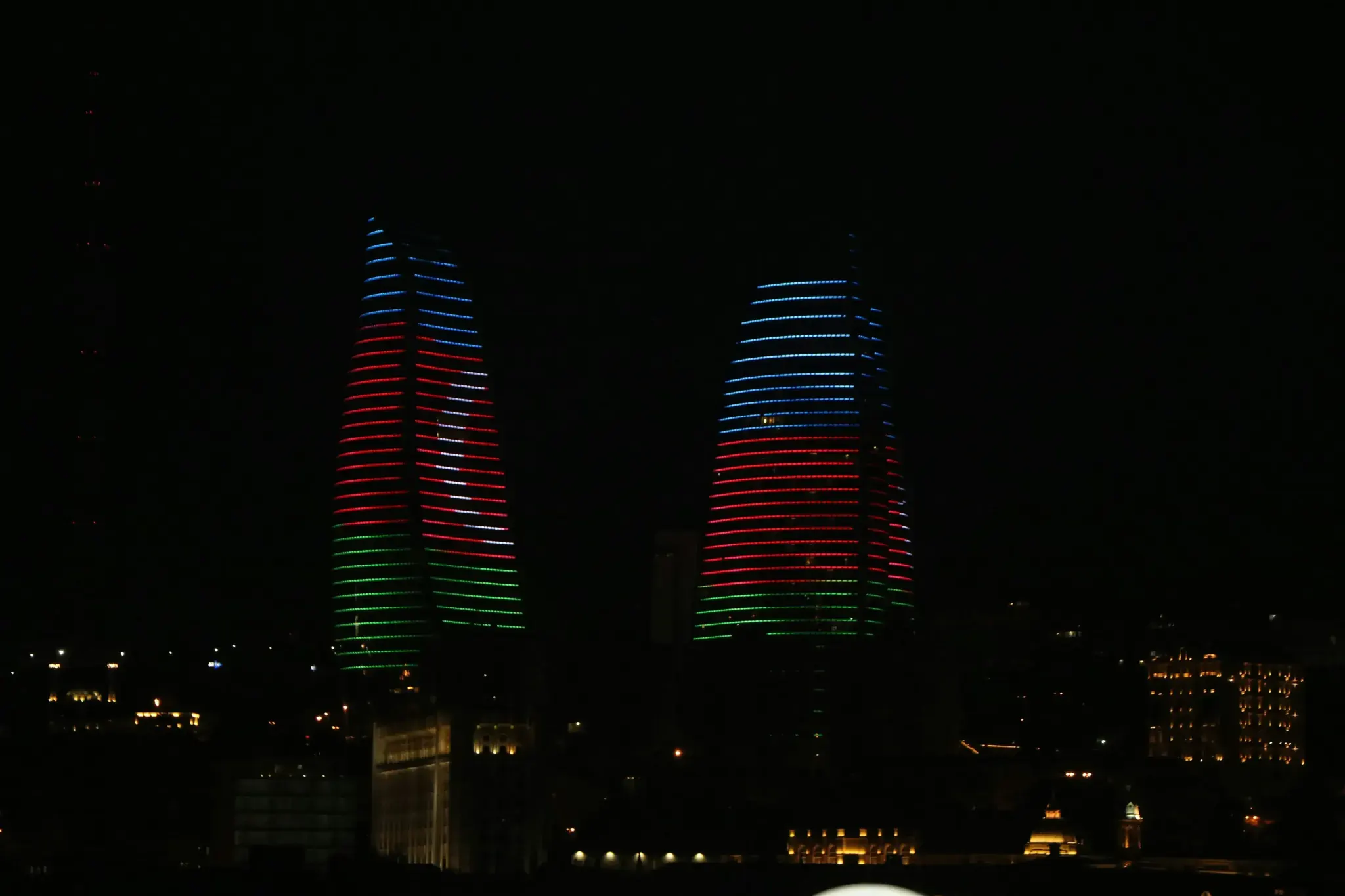
Nothing captures the East-meets-West idea better than Baku's skyline. Within the walls of the Old City (İçərişəhər) stand the medieval Maiden Tower and the 15th-century Palace of the Shirvanshahs. Just beyond them rise the Flame Towers and Zaha Hadid's column-free Heydar Aliyev Center, all curves and no straight lines. Centuries-old stone and futuristic glass share the same view.
- Eastern heritage: the Maiden Tower, the Palace of the Shirvanshahs, the walled Old City.
- Western modernity: the Flame Towers, the Heydar Aliyev Center, the contemporary seafront.
- Oil-boom in between: the ornate late-1800s and early-1900s townhouses that ring the historic core, a European flourish on an Eastern city.
- The contrast itself is the single most memorable thing about the city.
The three Flame Towers are lit by changing LED displays after dark, a nightly show that's easy to catch from the Boulevard or a rooftop. If you want to go deeper into the walled quarter and its lanes, our Icherisheher Old City guide covers what to see and how to walk it.
Cuisine: a melting pot of flavors
Azerbaijani cuisine is a fusion in its own right, drawing on Middle Eastern, Caucasian, and Eastern European traditions. Dishes like plov (saffron rice pilaf), kebabs, dolma, and the slow-cooked stew piti reflect those crossroads, and dessert means pakhlava or shekerbura. Whether you eat in a traditional spot or a modern restaurant, the food embodies Baku's blend. Meals are unhurried and shared, and nothing really ends until a pot of strong black tea arrives in pear-shaped armudu glasses. For the full run-down of dishes and where to try them, see our guide to what to eat in Azerbaijan.
The Caspian seafront
The Baku Boulevard runs for kilometres along the Caspian shore. The sea links the city to the East, while the promenade (with its parks, cafés, the Baku Ferris Wheel, and Crystal Hall) reflects a modern, outward-looking spirit. It's the easiest, most pleasant way to spend a warm evening, and the flat, shaded path makes it a natural place to walk off a long lunch or wait for the towers to light up.
Arts and festivals
Baku's cultural scene draws on both worlds. The Azerbaijan National Museum of Art holds local and international works, the Azerbaijan State Academic Opera and Ballet Theatre anchors the classical scene, and festivals run through the year. Carpet weaving is a recognized national art, the Azerbaijan Carpet Museum is even shaped like a rolled carpet, and its collection is one of the clearest ways to see how deeply the craft runs through the culture. This is also where Baku's musical side shows: mugham, the meditative classical vocal tradition of the region, is part of the same living heritage.
Shopping: bazaars and boutiques
Shopping mirrors the same fusion. The Old City's shops sell carpets, ceramics, and jewellery, while Nizami Street, a pedestrian boulevard of boutiques and cafés, carries international brands. You can hunt for handcrafted souvenirs and global labels in the same afternoon. If you want something to carry the trip home, edible souvenirs travel well: loose-leaf black tea, dried fruit and walnuts, jars of fruit jam, and boxed sweets are all easy finds, and a little friendly bargaining at the bazaars is part of the fun.
A modern, welcoming city
East meets West in Baku's spirit, too. Azerbaijani hospitality is taken seriously, and visitors routinely mention how welcome they feel, a warm, open atmosphere that connects two distinct worlds. To see how Baku fits into a longer trip, look at our 7-day Azerbaijan itinerary or browse the full Baku city guide.
Planning your visit
How to get there
Most visitors arrive at Heydar Aliyev International Airport (GYD), a short drive northeast of the centre and connected by airport bus and taxi. Baku is well served by direct flights from the Gulf, Turkey, and Europe, which makes it an easy long-weekend destination. Most travelers enter on the ASAN Visa e-visa, applied for online before the trip. Check the current rules for your nationality in our Azerbaijan e-visa guide.
Best time to go
Spring (roughly April to June) and autumn (September to October) are the most pleasant, with mild temperatures ideal for walking the Old City and the Boulevard. Summers are hot, and Baku is genuinely windy, the name is often linked to the "city of winds", so pack a light layer even in warm months. Winters are mild but breezy.
How long to stay
Three to four days is comfortable for the Old City, the seafront, the main museums, and a day trip nearby. That's enough to feel the East-meets-West character without rushing. If you have longer, use the city as a base and continue into the regions.
Getting around
The historic core is compact and best explored on foot, the Old City, Fountains Square, and the Boulevard are all within an easy walk of each other. For longer hops, the Baku Metro is cheap and efficient (buy a rechargeable BakıKart), and ride-hailing apps are inexpensive and widely used for anything further out. Comfortable walking shoes matter more here than almost anything else you'll pack, since the Old City's lanes are cobbled.
Beyond the city
Part of what makes Baku's crossroads character so easy to appreciate is how quickly you can step out of it. Gobustan, with its ancient rock art and bubbling mud volcanoes, is about an hour south. See our Gobustan petroglyphs guide. Closer still, the Absheron Peninsula holds the Ateshgah fire temple and Yanar Dag burning hillside that earned Azerbaijan its "Land of Fire" name, a reminder that the region's fire-worship history is older than any of the towers on the skyline. For the bigger regional picture, reasons to travel Azerbaijan sketches how it all connects.
FAQ
Why is Baku called a place where East meets West?
Baku sits on the crossroads of Europe and Asia, and its Silk Road and oil-trade history left a city where Eastern heritage and Western modernity coexist, visible in its architecture, food, and lifestyle.
What best shows the East-West contrast in Baku?
The skyline. The medieval Maiden Tower and Palace of the Shirvanshahs sit within walking distance of the Flame Towers and Zaha Hadid's Heydar Aliyev Center.
Is Azerbaijani food Eastern or Western?
Both. The cuisine blends Middle Eastern, Caucasian, and Eastern European influences, plov, kebabs, dolma, and piti are classic examples.
How many days do you need to feel Baku's character?
Three to four days is comfortable for the Old City, the seafront, the main museums, and a day trip nearby.
When is the best time to visit for comfortable weather?
Spring (roughly April to June) and autumn (September to October) are the mildest and best for walking. Summers are hot and windy, and winters are mild but breezy.
Is Baku a good base for exploring the rest of Azerbaijan?
Yes. Baku is well connected by air and sits within easy reach of day trips like Gobustan and the Absheron Peninsula, and it's the natural launch point for a wider route through the regions. See our 7-day Azerbaijan itinerary.
Do I need to speak Azerbaijani to get around?
No. English is common in tourist-facing places in Baku, and getting around the walkable core, the metro, and ride-hailing apps is straightforward for visitors.
Want a trip that captures both sides of Baku at your own pace? Message Pink Travel on WhatsApp with your dates and group size, and we'll shape a clear plan for the city and beyond.