
·9 min read
The fire of Azerbaijan: Ateshgah temple and Yanar Dag
Azerbaijan's fire sights near Baku, the Ateshgah fire temple and Yanar Dag burning hillside. Why it's the 'Land of Fire', and how to visit.
Azerbaijan calls itself the "Land of Fire," and the nickname is not marketing. On the Absheron Peninsula around Baku, natural gas seeping from the ground has burned for so long that fire became part of the culture, the religion and the identity of the place. Two sights make this vivid: the Ateshgah fire temple and the Yanar Dag burning hillside. Both sit a short drive from the capital, both can be seen in a single outing, and together they explain a country better than any museum plaque could. Here is why they matter and how to plan the trip.
Why Azerbaijan is the "Land of Fire"
The Absheron Peninsula sits on rich natural gas deposits, and for millennia gas escaping to the surface has ignited into flames that never go out. Those eternal fires shaped local belief long before the modern oil era, fire worship and reverence for these sites run deep in the region's history. Some traditions connect the flames to Zoroastrian devotion, in which fire is a sacred symbol of purity; over the centuries, pilgrims and travelers of different faiths were drawn to the same burning ground. Understanding that long relationship between people and flame is the key to both places below.
The same underground wealth that kept these fires alight later made Baku one of the birthplaces of the modern oil industry, so the "Land of Fire" name spans the ancient and the industrial in one breath. For the wider story of how that shaped the capital, read why visit Baku.
Ateshgah: the fire temple
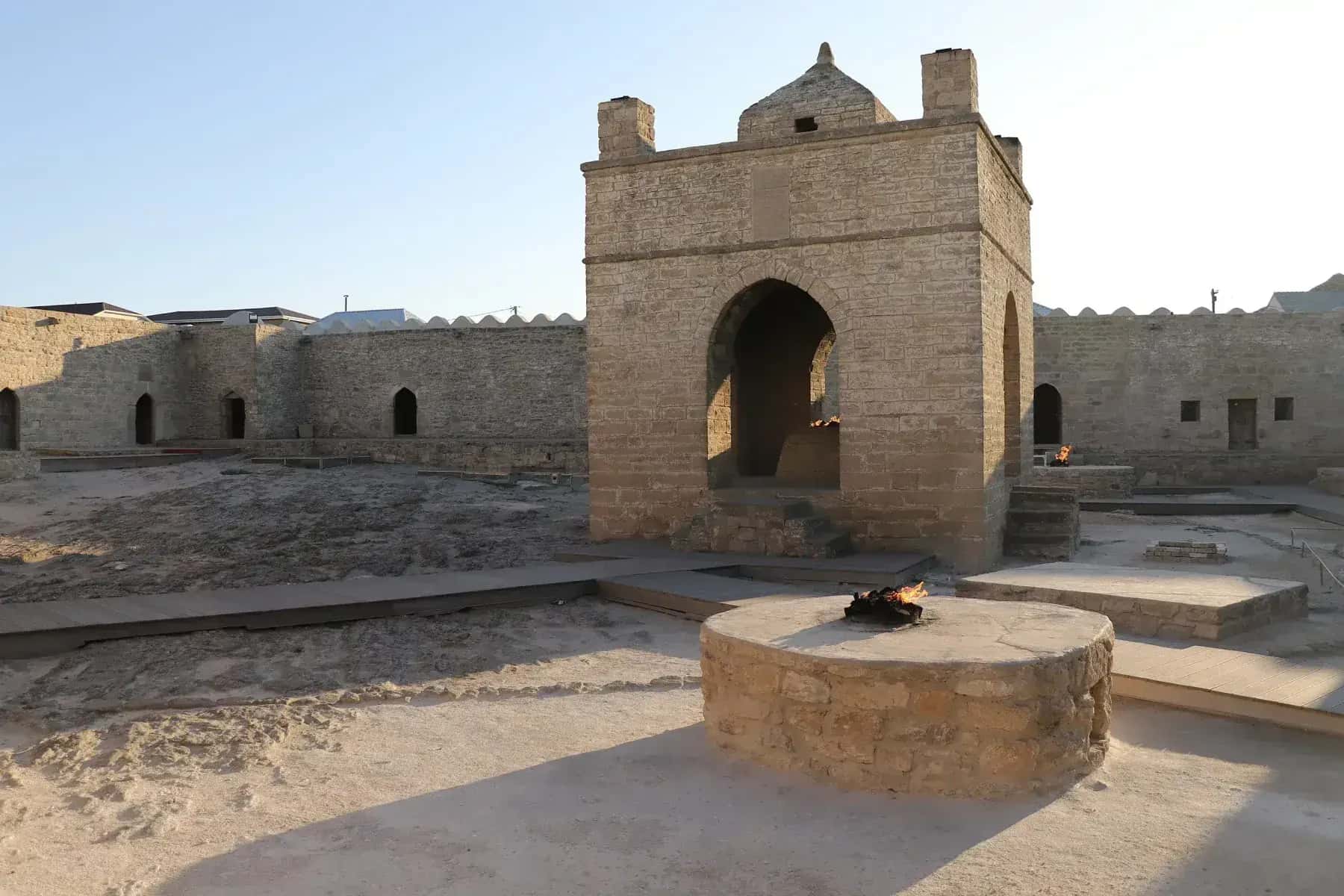
The Ateshgah is a fire temple at Surakhani, on the Absheron Peninsula east of central Baku, built around a natural gas vent where flames once burned continuously. Shaped like a fortified courtyard with a fire altar at its center, it drew pilgrims and travelers over the centuries and reflects layers of fire-associated worship. Stone inscriptions left by visitors, and the small cells ringing the courtyard where devotees once stayed, hint at how far people came to reach it.
Today it is a museum that tells the story of fire devotion and the travelers who came to see it, an atmospheric, compact site close to Baku. The setting, the architecture and the sense of a place shaped by centuries of belief are all real and worth the visit. It doesn't take long to walk the courtyard, read the exhibits and take in the altar.
Yanar Dag: the burning mountain
A short drive away, Yanar Dag, literally "burning mountain", is a hillside where a wall of natural flame rises straight from the ground and never stops. Unlike the temple, it is raw and elemental: fire coming directly out of the earth, best seen toward dusk when the flames glow against the dark. It is the single most direct way to understand why fire defines this country.
The site itself is small, the flames run along the base of a low slope, with a viewing area and a modest visitor center nearby, so you don't need long here, but timing matters. In daylight the fire can look pale; as the light drops, the same flames turn dramatic. If your day allows it, arrange to arrive in the late afternoon so you catch the shift. Bring a jacket: Absheron is famously windy, and the exposed hillside catches every gust.
How to visit: getting there and timing
Both sights sit on the Absheron Peninsula near Baku, close enough to each other that they combine naturally into a half-day trip. Yanar Dag lies to the north of the city and Ateshgah to the east, so a typical loop takes in one, crosses the peninsula, and finishes at the other.
- Getting there: the easiest option is a car or driver, whether a private tour, a hired driver for the day or a ride-hailing app. There is no single tourist train linking the two, and public transport involves changes, so most visitors travel by road. Roughly speaking, each site is within a short drive of central Baku.
- How long: allow a relaxed half-day for both. Add Gobustan, with its ancient petroglyphs and bubbling mud volcanoes, and you have a full and varied day of Azerbaijan's oldest landscapes.
- Best time to go: the sites are open year-round and the flames burn in every season. Spring and autumn are the most comfortable for the outdoor parts; summer is hot and very windy, winter cold and breezy. For Yanar Dag specifically, aim for late afternoon into dusk.
- What to bring: comfortable shoes, a windproof layer, water, and a camera that copes with low light for the after-dark flames.
A common way to fit both into a wider visit is to base yourself in the capital and treat the fire sights as one of several day trips, our 7-day Azerbaijan itinerary shows how the Absheron sights slot into a longer route, and the Baku city guide covers where to stay and how to get around.
Combining the fires with the rest of Absheron
The peninsula rewards a slightly longer look. Beyond the two headline fire sights, Absheron is dotted with medieval stone castles and towers built when the region guarded the approaches to Baku, and the historic walled Old City back in the capital rounds out the picture of how this landscape was lived in. If you have the appetite for more, our Icherisheher Old City guide pairs well with a fire-sights morning, and the Gobustan petroglyphs guide covers the rock art and mud volcanoes to the south.
Which official signals support this
- both are long-established, documented cultural and natural monuments on the Absheron Peninsula
FAQ
Why is Azerbaijan called the "Land of Fire"?
Because natural gas seeping from the ground on the Absheron Peninsula has burned continuously for millennia, shaping local belief and giving the country its enduring nickname. The name spans both the ancient fire-worship sites and Baku's later role in the modern oil industry.
What is the Ateshgah?
The Ateshgah is a fire temple at Surakhani near Baku, built around a natural gas vent where flames burned continuously. It is now a museum devoted to the history of fire worship.
What is Yanar Dag?
Yanar Dag, the "burning mountain," is a hillside near Baku where natural gas keeps a wall of flame permanently alight. It is most striking at dusk.
Can I see both in one trip?
Yes. Both are on the Absheron Peninsula near Baku and combine easily into a half-day, often with Gobustan added for a full day.
How do I get to Ateshgah and Yanar Dag from Baku?
Most visitors go by road, using a private tour, a hired driver, or a ride-hailing app. The two sites sit on opposite sides of the peninsula (Ateshgah to the east, Yanar Dag to the north) so a driver who links them in one loop is the simplest way to see both.
What is the best time of day to visit Yanar Dag?
Late afternoon into dusk. The flames look pale in bright daylight and dramatic once the light drops, so timing your arrival for early evening gives you the best view.
Are the fires natural?
The flames come from natural gas in the ground, and Yanar Dag's burning hillside is a genuine natural phenomenon. At Ateshgah, the site's history as a fire-worship temple built around a natural gas vent is real.
How much time do I need for both sights?
A relaxed half-day covers both, with time to walk the temple courtyard and wait for Yanar Dag to glow at dusk. Add Gobustan to the south and it becomes a full day.
Want to see the fires that named a country? Message Pink Travel on WhatsApp with your dates and we'll build the Absheron fire sights into your trip. Explore our tours or reach out via our contact page.