
·8 min read
What to eat in Karabakh: traditional dishes & where to try them
A guide to traditional Karabakh food (kebab, bozbash, xəngəl, kətə, motal cheese and Shusha's famous sweets) plus where to try them today.
Karabakh cooking is mountain food: smoky, hearty, and built around grilled meat, wild herbs, aged cheese, and fruit from the orchards that carpet the region's valleys. It belongs to the wider Azerbaijani table (so plov, dolma, and pakhlava all appear) but the highlands around Shusha have their own accent, and a handful of dishes are genuinely Karabakh's own. Here's what to look for, and, just as importantly, where you can actually try it today.
Karabakh kebab and grilled meats
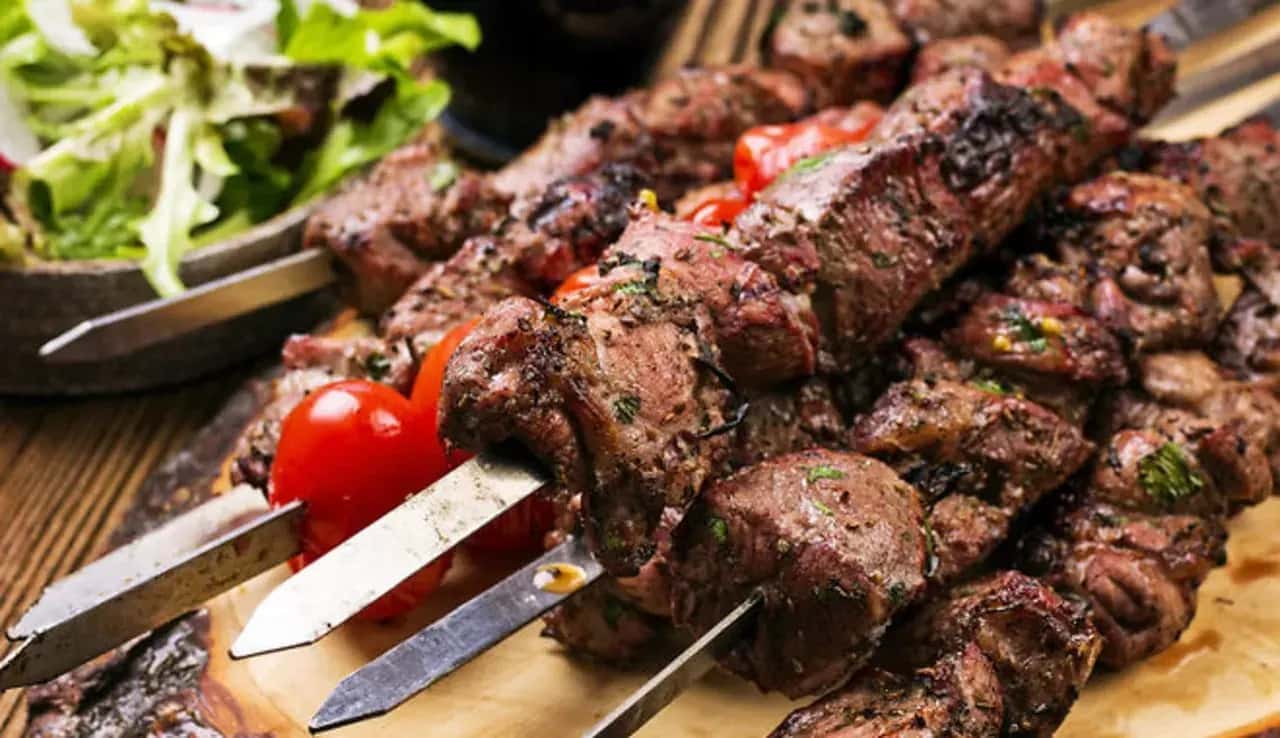
If Karabakh has a signature, it's meat over coals. The cool highland pastures have long produced prized lamb, and grilling it well is treated as a craft here. Expect skewers of marinated lamb and beef, minced lula kebab, and whole cuts cooked slowly over embers, served simply with grilled tomatoes, raw onion dressed in sumac, flatbread, and a fistful of fresh herbs. It's the dish visitors ask for by name, and the one locals are proudest of.
Bozbash and the hearty soups
Cold mountain evenings call for a bowl of something slow-cooked. Bozbash (mutton simmered with chickpeas, potato, and sometimes chestnuts or sour plums) is the classic, rich and gently tangy. You'll also meet piti, the individual clay-pot lamb-and-chickpea soup eaten in two stages (drink the broth first, then mash the solids), which the nearby city of Sheki has made famous but which belongs to this whole mountain belt. Either one is a meal in itself.
Xəngəl and dumpling dishes
Xəngəl (khangal) is comfort food: broad sheets or squares of boiled dough layered with fried minced meat or caramelised onion, topped with garlicky yoghurt. Its little cousin dushbara (tiny hand-pinched dumplings floating in a clear broth, finished with vinegar and mint) turns up as a warming starter. Both reward a proper sit-down restaurant that still makes the dough by hand.
Kətə and savoury pastries
Kətə is the pastry to seek out, a flaky, pan-baked round filled with a buttery mix of herbs, onion, or sometimes a sweet nut filling. Alongside it you'll find qutab, the thin folded flatbread stuffed with greens, pumpkin, or meat and cooked on a griddle. These are the region's everyday food: cheap, fast, and made fresh in front of you.
Motal cheese, herbs and the mountain pantry
The highlands are cheese country. The prize is motal, a crumbly, sharp sheep's-milk cheese traditionally aged inside a skin bag, often mixed with wild thyme or other mountain herbs. It arrives on the table with bread, butter, and a heap of raw greens, because Karabakh cooks lean hard on foraged herbs: wild garlic, sorrel, and springtime greens go into omelette-like kükü, into fillings, and straight onto the plate. This is genuinely regional eating you won't taste the same way anywhere else.
Shusha's sweet tooth: pakhlava and rose water
The old town of Shusha had a long reputation as a place of refined taste (a city of poets, musicians, and confectioners) and its sweets carry that legacy. Look for layered, nut-filled pakhlava cut into diamonds, delicate shakarbura, and pastries perfumed with rose water (gülab), long distilled from the roses of the surrounding hills. Paired with a glass of black tea, they're the traditional way to end a Karabakh meal.
Mulberries, walnuts and orchard fruit
Karabakh's valleys are famous for fruit, and it finds its way into the food. Mulberries (tut) are eaten fresh in summer and boiled down into doshab, a thick natural syrup drizzled over pastries or stirred into winter dishes in place of sugar. Walnuts thicken sauces and fill sweets; dried fruit sweetens the rice in a festive plov. Buying a bag of local walnuts, dried mulberries, or a jar of doshab is one of the nicest edible souvenirs you can carry home.
Tea and the Karabakh table
As across Azerbaijan, nothing really ends until tea. Strong black tea is poured into pear-shaped armudu glasses and served with jam, sweets, and, in the mountains, often a pot brewed with wild thyme. Meals are shared from the middle of the table rather than plated individually, they start with a spread of herbs, cheese, and bread, and they're meant to be unhurried. Accepting a second glass of tea is simply good manners.
Where to actually try Karabakh food today
Here's the practical part. Much of Karabakh is a reconstruction zone, and independent travel into the region is regulated, so for most visitors the realistic way to taste this cooking is either in Baku or on an organised visit:
- In Baku, several restaurants specialise in Karabakh and mountain-Azerbaijani cooking, and it's the easiest place to try kebab, bozbash, xəngəl, and motal cheese in one trip. Our eat and food experiences page and our wider guide to Azerbaijani cuisine are good starting points.
- On a guided visit into the region, meals are arranged as part of the itinerary, so you eat where locals do. See our Karabakh hub and Karabakh tours for how a trip is put together.
Either way, tell us you care about food and we'll build the right stops in.
Planning a trip to Karabakh
Because access is managed, the food is only ever half the plan, getting there is the other half. Before you go, read our Karabakh access rules for how visits are authorised right now, and our honest take on whether Karabakh is safe to visit. When you're ready to map out the days, the 3-day Karabakh itinerary shows how the region fits together.
FAQ
What food is Karabakh known for?
Karabakh is best known for its char-grilled kebabs and lamb, hearty soups like bozbash and piti, xəngəl (dough-and-meat with garlic yoghurt), aged motal cheese, and the sweets of Shusha, layered pakhlava and rose-water pastries.
What is Karabakh kebab?
It's marinated lamb or beef grilled over coals, served with grilled tomatoes, sumac onions, flatbread, and fresh herbs. The region's highland pastures are known for good lamb, and grilling it well is a point of local pride.
Is Karabakh food the same as Azerbaijani food?
It's part of the same cuisine, so you'll recognise plov, dolma, qutab, and pakhlava. But the mountain setting gives it a distinct accent, more grilled meat, wild herbs, aged cheeses like motal, and orchard fruit such as mulberries and walnuts.
Where can I eat Karabakh food if I can't travel to the region?
Baku is the easiest place: several restaurants specialise in Karabakh and mountain-Azerbaijani cooking, so you can try the kebabs, soups, and cheeses in one visit. See our eat and food experiences page.
Is Karabakh food halal-friendly?
Largely yes. The cooking is built around lamb, beef, chicken, and dairy rather than pork, so most traditional dishes are naturally halal-friendly. As always, ask at the restaurant if it matters to you.
Can Pink Travel arrange food-focused experiences in Karabakh?
Yes. Tell us food matters to you and we'll build the right stops, from Karabakh-style restaurants in Baku to meals arranged on a guided visit into the region.
Hungry to taste Karabakh for yourself? Message Pink Travel on WhatsApp and we'll weave the region's best food into your trip.
Plan Your Karabakh Trip
The main Karabakh planning pages in one place
The hub, tours page, Shusha page, and key guides are grouped together so readers can build context before making a travel decision.
For a long time, Karabakh was mostly known from a distance. Now Shusha, changing access rules, and rebuilding tourism infrastructure are turning it into a destination people can plan with more intention.
Shusha-led routes of one to three days, your entry permit filed for you, and a firm per-person price before you commit to anything.
Why the official Karabakh permit portal won't work for you