
·8 min read
Why Is Baku Called the City of Winds? Khazri, Gilavar and the Name
Why Baku is the City of Winds: the cold Khazri, the warm Gilavar, why Absheron is so windy, what 'Baku' may mean, and what to pack and see.
Baku is called the City of Winds because the Absheron Peninsula it sits on is one of the windiest places on the Caspian coast. Two winds define the local weather: the Khazri, a cold, gusty northerly, and the Gilavar, a warm southerly. Residents talk about them the way other cities talk about rain. Below we explain where the winds come from, what the name "Baku" may mean, how the wind shapes a visit, and what else the city is famous for.
The two winds: Khazri and Gilavar
The Khazri is the northern wind. It arrives from the north across the Caspian, usually behind a cold air mass, and it is the one that makes headlines. Under a Khazri the sky is clear, the air turns sharply cooler, the sea gets rough and walking along the Boulevard becomes a workout. Reference sources note that strong episodes can top 29 m/s (over 100 km/h), and Azerbaijani news outlets report 25 to 30 m/s gusts in Baku and on Absheron during recent storms, which is enough to disrupt rail services. Most days are nothing like that, but a steady breeze is the default.
The Gilavar is its opposite: a warm wind from the south, blowing mainly across the east of the country around Baku and Shamakhi. A change of wind can change the feel of the day within hours, so check the forecast rather than yesterday's weather.
Neither wind is limited to one season. Gusty weather happens year-round, and in summer the Khazri is often welcome because it takes the edge off the heat.
Why Absheron is so windy
Baku stands on the tip of the Absheron Peninsula, a low, mostly open spit of land that juts east into the Caspian. There are no big hills or forests to break the air, the sea lies on both sides, and the cold and warm air masses that drive the Khazri and Gilavar meet and funnel along the peninsula. Research on the Absheron coast puts average wind speeds around 5.8 to 7 m/s, which is why wind power has been developed in the region.
What does "Baku" mean?
Nobody knows for certain. The popular explanation, a folk etymology recorded since the 19th century, links the name to the Persian bad-kube, "wind-pounded" or "wind-beaten" city (bad, wind; kubidan, to pound). It matches the weather so neatly that it has become part of the city's identity.
Scholars are more cautious. The more widely cited derivation goes back to the Old Persian baga, "god", and the name appears in early forms such as Bagavan and in Arabic sources as Bakuh. A further folk reading, "God's town", also circulates. So the best way to put it: Baku may well be older than the wind story, but the wind story is the one everyone repeats, and the nickname fits either way.
How wind shapes daily life
- Walking. The Boulevard and the open squares are the windiest places. The narrow lanes of the Old City, with their stone walls, can feel calm by comparison, a good reason to start your day there. Our Old City guide has the route.
- Sea and views. On Khazri days the Caspian is choppy and the sky is usually clear, which suits skyline photos.
- Heat. In July and August Baku is hot (average highs around 30 to 31 °C), and a breeze is what makes evenings by the water pleasant.
- Plans. Boat trips and open-air events can be affected on a very windy day. Keep an indoor option, such as a museum, in your back pocket.
What to pack
- A windproof layer all year, even in summer evenings. Light and packable is better than heavy.
- Layers from November to March, when daytime highs are around 7 to 13 °C and a Khazri makes it feel colder.
- A hat or scarf that stays on, and sunglasses (wind and grit).
- A zipped bag, and a plan for loose papers and maps if you eat outside.
- Comfortable shoes: the Old City is cobbled and hilly.
The monthly picture is in our guide to the best time to visit Azerbaijan.
What Baku is famous for
Wind is only one of the city's labels. Baku is also known for:
- The UNESCO Old City, with the Maiden Tower and the Palace of the Shirvanshahs. See our Baku Old City guide.
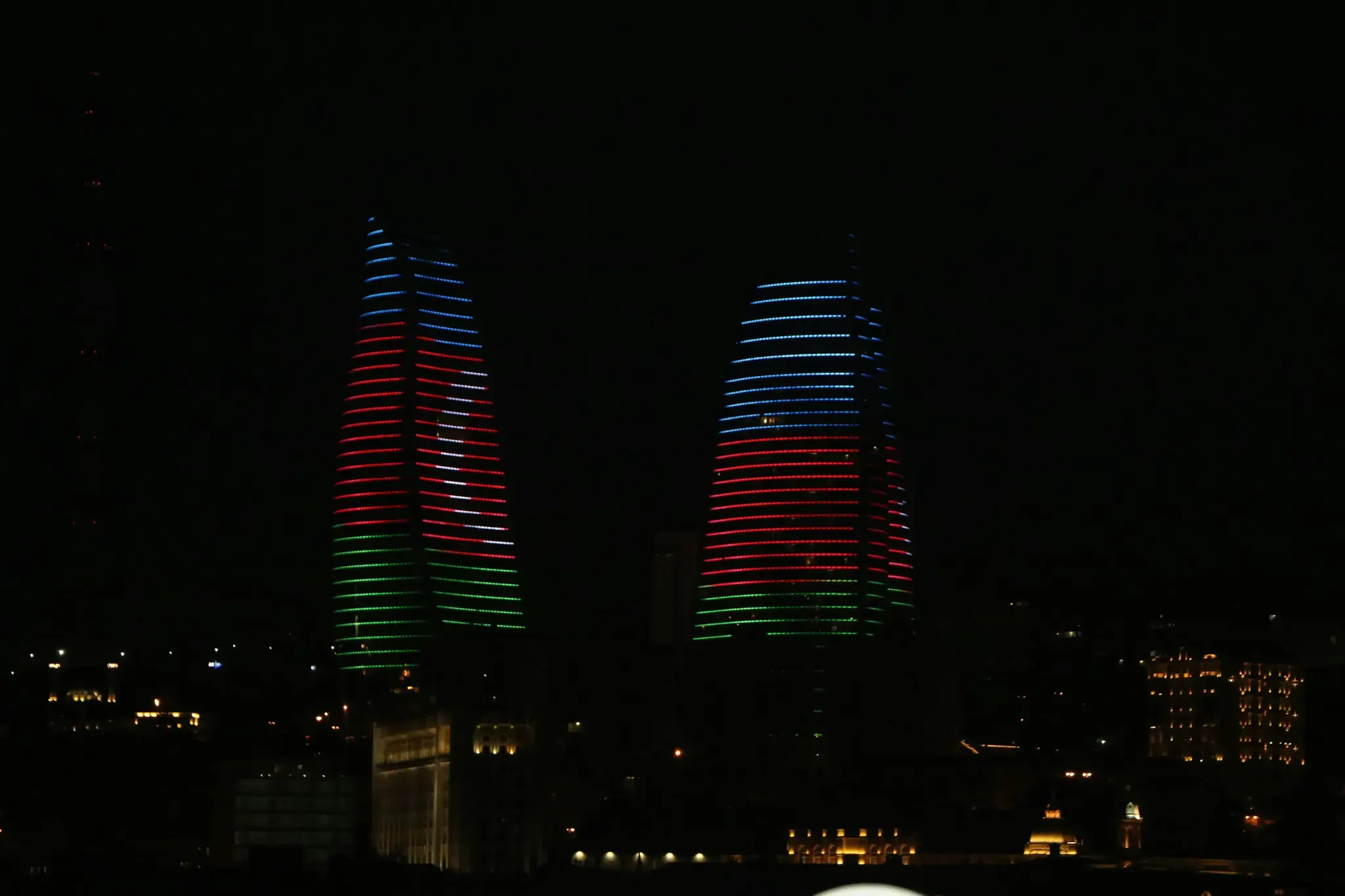
- A skyline that mixes eras: Flame Towers, the Heydar Aliyev Center, the seafront promenade. We cover the contrast in Baku: where East meets West.
- The "Land of Fire": natural gas flames at Yanar Dag and the Ateshgah fire temple outside the city, covered in our Ateshgah and Yanardag guide.
- Food: plov, kebabs, dolma, pakhlava and plenty of tea.
- Major events, including the Formula 1 Azerbaijan Grand Prix. In 2026 the race runs on Saturday 26 September.
Is Baku worth visiting?
Yes, if you like a compact city where medieval stone, modern architecture and the sea sit within walking distance. The wind is part of the experience, not a reason to skip it: dress for it, use the Old City on blustery days and save the waterfront for calm evenings. Our overview, why visit Baku, lays out nine reasons and how many days to allow.
FAQ
Why is Baku called the City of Winds?
Because the Absheron Peninsula is open to the Caspian and swept by strong winds all year, above all the cold northern Khazri and the warm southern Gilavar.
What is the Khazri wind?
A cold northerly wind from the Caspian side that brings clear skies, falling temperatures and rough seas, and can reach gale force.
What is the Gilavar wind?
A warm southerly wind, the counterpart of the Khazri, felt mainly around Baku and Shamakhi.
Does "Baku" mean "city of winds"?
Not proven. A popular folk etymology derives it from Persian bad-kube, "wind-pounded", but linguists point to older roots linked to baga, "god". Either way the nickname stuck.
Is Baku windy all year?
Gusty days happen in every season. Winters are cold and breezy, and summers are hot with a welcome breeze on the coast.
What should I wear in Baku?
Layers and a windproof jacket. In winter add a warm coat and a hat; in summer a light layer for the evening.
Want a Baku plan that fits the weather and your dates? Message Pink Travel on WhatsApp with your dates and group size, and we will build a clear route, including the Old City, the fire sites and a day trip.