
·8 min read
Lankaran travel guide: Caspian coast, lighthouse and Hirkan forest
How to get from Baku to Lankaran, plus the beach, lighthouse, fortress, Hirkan forest, tea plantations, lavangi and the best time to go.
Lankaran sits in the far south of Azerbaijan, between the Caspian Sea and the Talysh Mountains, almost on the border with Iran. It is a different Azerbaijan from the dry Baku coast: green, wet, subtropical, with tea bushes, citrus and a forest that is one of the oldest in the region. Most visitors skip it, which is a good part of its appeal.
Getting to Lankaran from Baku
By road. The route follows the main highway south from Baku and is roughly 250 km. Allow three to four hours by car without long stops. This is the simplest way to go, and the only one we would plan a day around. A one-day round trip is possible but tiring, and a night in Lankaran makes the visit far more pleasant.
By bus. Buses run from Baku's international bus terminal and take around four to six hours, depending on the service.
By train. A railway line runs through Lankaran towards Astara, but the journey is slow, so check the current timetable and tickets on the official Azerbaijan Railways site (ticket.ady.az) before relying on it.
By air. Lankaran has an international airport, but scheduled passenger service is limited and varies by season. We could not confirm a regular Baku flight, so do not build a plan on one without checking directly with the airline.
If you are comparing options, our guide to renting a car or hiring a driver applies here: a long highway day suits a driver well. For a first look at the city and what it offers, see the Lankaran city page.
The Caspian coast and the beach
Lankaran has a Caspian shoreline with dark sand and a seaside promenade that fills in the evening. In summer it is warm and humid, with a mean July daily high of around 31 degrees, and the sea is the main draw. Do not expect a resort strip: it is a working coastal city, which is part of its character.
The fortress and the lighthouse
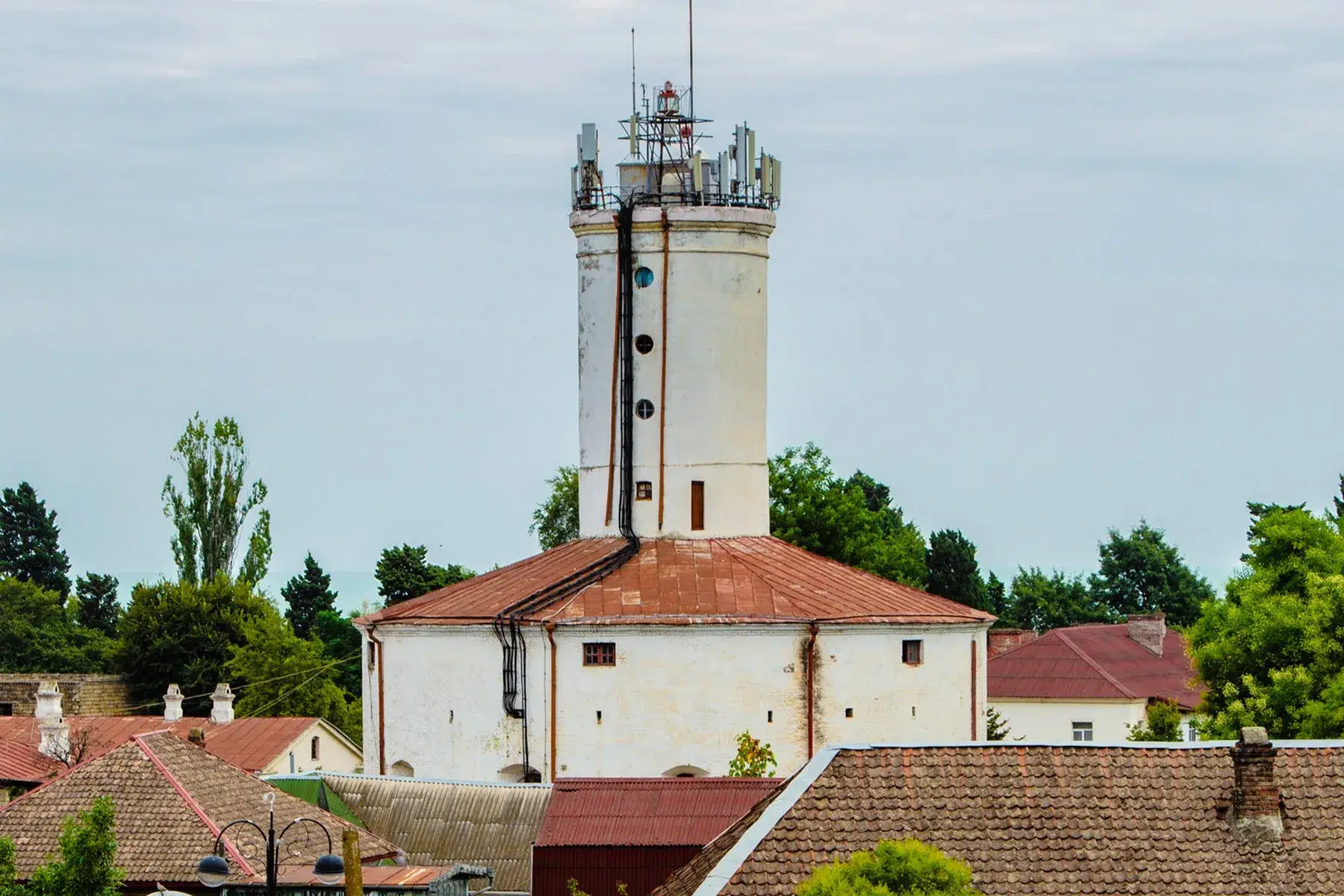
Lankaran was the seat of the Talysh Khanate, and its fortress, the Zindan, is the main historic sight. Russian forces took the fortress during the Russo-Persian War of 1804 to 1813, and the city passed to Russia under the Treaty of Gulistan in 1813. In 1869 a lantern was fitted on top of one of its bastions, turning it into a lighthouse that stands on the old prison walls.
The lighthouse is still in use, and visitors view it from outside. It is the photograph most people take of the city, best in late afternoon light.
Hirkan National Park
Hirkan National Park was founded in 2004 and now covers about 40,000 hectares across the Lankaran and Astara districts. It protects a lowland forest that survives from the Hyrcanian forests that once covered the whole region, with ironwood trees (Parrotia), many plants that are found nowhere else, and a few elusive animals, among them the Caucasian leopard. Hirkan is part of the UNESCO-listed Hyrcanian Forests, inscribed in 2019.
Plan on a half day. Walking is the main activity, and the forest feels different from anywhere else in the country, which is the reason to come. The ground is wet for much of the year, so bring waterproof shoes.
Tea plantations
Lankaran is the heart of Azerbaijan's tea country, and the first tea factory in the republic was built here in 1937. The plantations in the hills, including around Istisu, can be visited, and a glass of tea in a village is one of the better ways to spend an hour. If tea is a priority, tell us before you go so the visit fits the plan.
What to eat: lavangi and more
Lavangi is the dish of the region: chicken or fish stuffed with a mix of onions, walnuts and plum sauce, traditionally baked in a clay tandir oven. Fish is common on the coast, and you will also meet pumpkin plov, kükü (a herb omelette) and local sweets. Our overview of what to eat in Azerbaijan puts the dishes in context. Lavangi is often cooked to order, so ask in advance.
Astara, Lerik and the surroundings
Astara is the border town with Iran, about 40 km south of Lankaran. Inland, the Talysh Mountains rise above the coast, and the Lerik district is a good base for mountain villages and hiking. Most people see these as extensions of a Lankaran stay rather than separate trips.
When to go and how long to stay
Lankaran is Azerbaijan's wettest region, with roughly 1,600 to 1,800 mm of rain a year, so pack a light waterproof whatever the season. Summers are warm and humid, and winters are cool and damp. For walking in Hirkan, the spring and autumn months are generally more comfortable than high summer.
Two days is the sensible minimum: one for the road and the town, one for the forest and tea. If you are fitting this into a wider route, see how many days to spend in Azerbaijan. To plan a private Lankaran trip, write to us on the trip builder and we will build it with you.