
·10 min read
A traveler's guide to Azerbaijan's monuments and statues
From Baku's Nizami statue to the poets of Karabakh, a guide to the monuments that tell Azerbaijan's story: who they honor and why they matter.
Monuments are how a country decides what to remember out loud. In Azerbaijan they lean heavily toward poets, thinkers and cultural figures rather than only generals, which tells you something about how the nation sees itself. For a traveler, learning to read these statues turns a walk past bronze into a short course in Azerbaijani history. This guide walks you through who Azerbaijan honors, where to find the monuments that matter, and how to plan a trip that reads the country through its public sculpture.
The country honors its poets first
The most striking thing about Azerbaijan's public sculpture is who gets the pedestals. The towering Nizami Ganjavi statue in Baku, the poet Natavan, the composer Bulbul, the poet Vagif, again and again the figures raised highest are writers and artists. It is a deliberate signal that Azerbaijan claims a deep literary civilization, not just a modern petro-state.
That emphasis is not new. Reverence for poetry runs through centuries of Azerbaijani life, from medieval court verse to the mugham singers still heard today. When a modern city puts a poet on its tallest plinth, it is continuing a very old habit rather than inventing one. Notice, too, how many of the honored figures are women (Natavan, a 19th-century poet and noblewoman, stands among the most respected) which stands out in the wider region's monumental tradition.
Baku: statues woven into the city
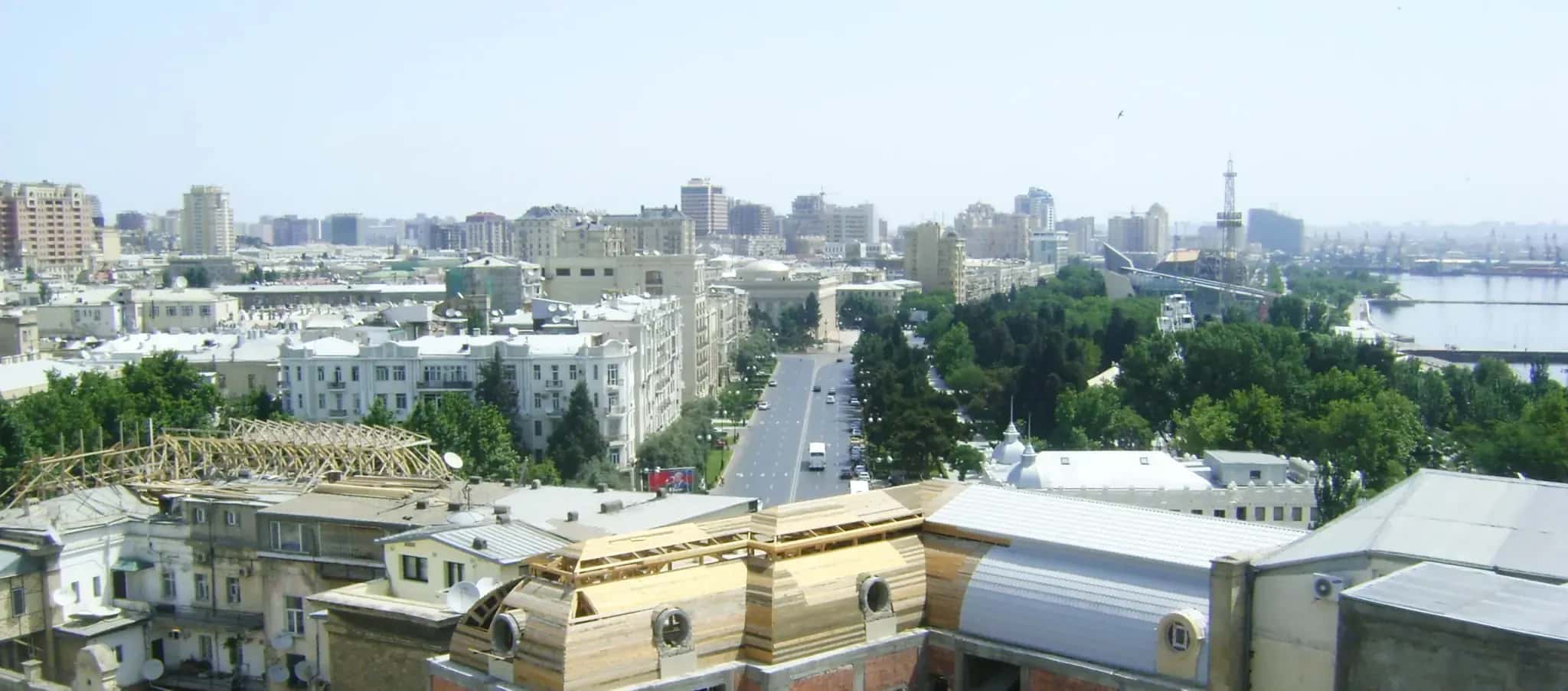
Baku carries its monuments in its everyday streets. The Nizami statue in Nizami Square, unveiled in 1949, is a 6-meter bronze on a tall pedestal by sculptor Fuad Abdurahmanov, a fixed point locals navigate by. The Museum of Literature carries sculptures of major poets on its facade. Walking the center, you pass memory constantly.
The good news for visitors is that most of the city's landmark statues sit within an easy walk of one another, clustered around Nizami Square, Fountains Square and the Old City walls. You don't need a car or a plan, an unhurried afternoon on foot does it, ideally with a coffee stop or two. We map a route for this in the Baku monuments walking route. If you're still deciding whether the capital earns a few days of your trip, our guide to why visit Baku makes the case, and the Old City guide covers the walled quarter where many of these figures appear.
Ganja: where Nizami rests
Azerbaijan's second city, Ganja, holds the mausoleum of Nizami Ganjavi, the 12th-century master of the Khamsa, the five long narrative poems that made his name across the Persian-speaking world and beyond. The complex is one of the country's most important literary pilgrimage sites, with a square out front decorated with figures drawn from his poems. Standing there, you get the sense of a writer whose stories still shape the national imagination.
Ganja sits west of Baku and is a comfortable stop on any wider western loop, often paired with a night in the city itself. We cover the mausoleum in depth in the Nizami Ganjavi mausoleum guide, and the broader Ganja historical guide sets it in context alongside the rest of the old city.
Karabakh: monuments that survived
In Karabakh the monuments carry a heavier charge. Shusha's bullet-scarred busts of Natavan, Vagif and Bulbul are displayed with their damage intact. The Vagif Mausoleum stands restored above Jidir Duzu. Here a monument is not only about who it honors but about what it endured.
Shusha's link to these figures is not incidental. The town has long been described as a cradle of Azerbaijani music and poetry, and several of the people honored in bronze either lived, worked or are buried there, which is why their monuments feel so bound to the place. To understand why these particular statues matter, it helps to know the people behind them, and our Shusha music heritage piece traces that cultural lineage. For access, safety and permit questions, we keep those to the dedicated resources rather than summarizing them here. See the Karabakh region overview and the official source noted in the FAQ below.
How to read a monument on a trip
Three quick questions unlock almost any statue in Azerbaijan:
- Who is it? More often than not, a poet or artist rather than a soldier.
- When was it raised? Soviet-era, post-independence, and post-2020 monuments carry very different messages.
- What condition is it in? In Karabakh especially, damage and restoration are part of the meaning.
A little groundwork makes each of these easier to answer on the spot. Snap a photo of any plaque or inscription, many carry a name and a date even when they're only in Azerbaijani, and you'll have the two facts that unlock most of the story later. A guide who knows the figures turns a row of busts into a set of biographies, which is often the difference between a nice photo and a memory that sticks.
Planning a monument-focused trip
You don't need a specialist itinerary to see the best of Azerbaijan's monuments. You need to know how the pieces connect.
- How long: A focused monument trip pairs naturally with a wider route. Two to three days in and around Baku covers the city's statues comfortably; add days if you continue west toward Ganja or into the regions.
- Best season: Spring and autumn are the most pleasant for the long, on-foot walking that monument-hunting involves, mild temperatures and good light. Summers are hot, and winter walking is doable but brisk.
- What to bring: Comfortable shoes for cobblestones and squares, a light layer for changeable weather, and a phone or camera for those inscriptions. Little of this sightseeing costs anything, since most statues stand in public squares and parks.
- How to get around: Baku's core is walkable end to end; longer hops to Ganja or the west are usually done by road as part of a planned route. See how a full loop fits together in our 7-day Azerbaijan itinerary.
If you'd rather thread the monuments into a broader cultural trip, our reasons to travel Azerbaijan guide sketches how the regions link up, and the Azerbaijan country overview is a good starting point for the bigger picture.
FAQ
Who is the most famous monument subject in Azerbaijan?
Nizami Ganjavi, the 12th-century poet, is honored with a major statue in Baku and a mausoleum in Ganja. Azerbaijan's monuments strongly favor poets and cultural figures.
Where is the Nizami statue in Baku?
In Nizami Square in central Baku. Unveiled in 1949, it is a roughly 6-meter bronze on a tall pedestal, created by sculptor Fuad Abdurahmanov.
Why are Karabakh's monuments treated differently?
Many were damaged or vandalized during the years the region was inaccessible. Some, like Shusha's busts, are displayed with the damage left visible, so the monument records its own history.
Can I see Baku's main statues on foot?
Yes. Most of the city's landmark statues cluster around Nizami Square, Fountains Square and the Old City, all within an easy walk of each other, an afternoon on foot covers the highlights. Our Baku monuments walking route lays out an order.
Do I need to pay to see the monuments?
Most statues stand in public squares, parks and streets, so there's usually nothing to pay to view them. Museums and some historic complexes may charge admission. Check current details at each site, as prices and opening hours change.
Which figures should I read up on before I go?
Nizami Ganjavi, the poet Natavan, the composer Bulbul and the poet Vagif recur across the country's monuments. Knowing even a little about each turns a row of statues into a set of stories worth photographing.
How should I plan a monument-focused trip?
Combine Baku's city statues, Ganja's Nizami mausoleum, and Karabakh's restored monuments. Message us with your interests and we'll build a route.
Want a trip that reads Azerbaijan through its monuments? Message Pink Travel on WhatsApp with your interests, and we'll shape the route. Explore our tours or reach out via our contact page.