
·8 min read
The Karabakh horse: a living national symbol
A guide to the Karabakh horse, the golden-coated mountain breed and one of Azerbaijan's oldest symbols: its history, Shusha links, and where it lives.
Not every national symbol is a building. One of Azerbaijan's most beloved is an animal: the Karabakh horse, a compact, spirited mountain breed with a famous golden sheen. For centuries it has stood for the region's identity, and understanding it is a surprisingly direct way into Karabakh's culture. If you are the kind of traveler who likes the story behind a place as much as the sights, the horse is a thread that ties Karabakh's landscape, art, and history together.
An ancient mountain breed
The Karabakh horse is one of the oldest riding breeds of the region, developed in the highlands of Karabakh over centuries. It is prized for endurance, sure-footedness on mountain terrain, and above all its distinctive coat, often a lustrous chestnut-gold that gave rise to nicknames tied to the sun. It is a breed shaped by its landscape, which is exactly why it belongs to Karabakh in the popular imagination.
Breeds like this are the product of place. Generations of horses raised on steep, stony pastures at altitude grow compact and hardy, with the stamina and balance that mountain travel demands. The result is a horse built for the terrain around it rather than for the show ring, smaller than many European breeds, but agile, willing, and famously good-tempered. That combination of practicality and beauty is a large part of why the breed earned such affection.
Tied to Shusha and Jidir Duzu
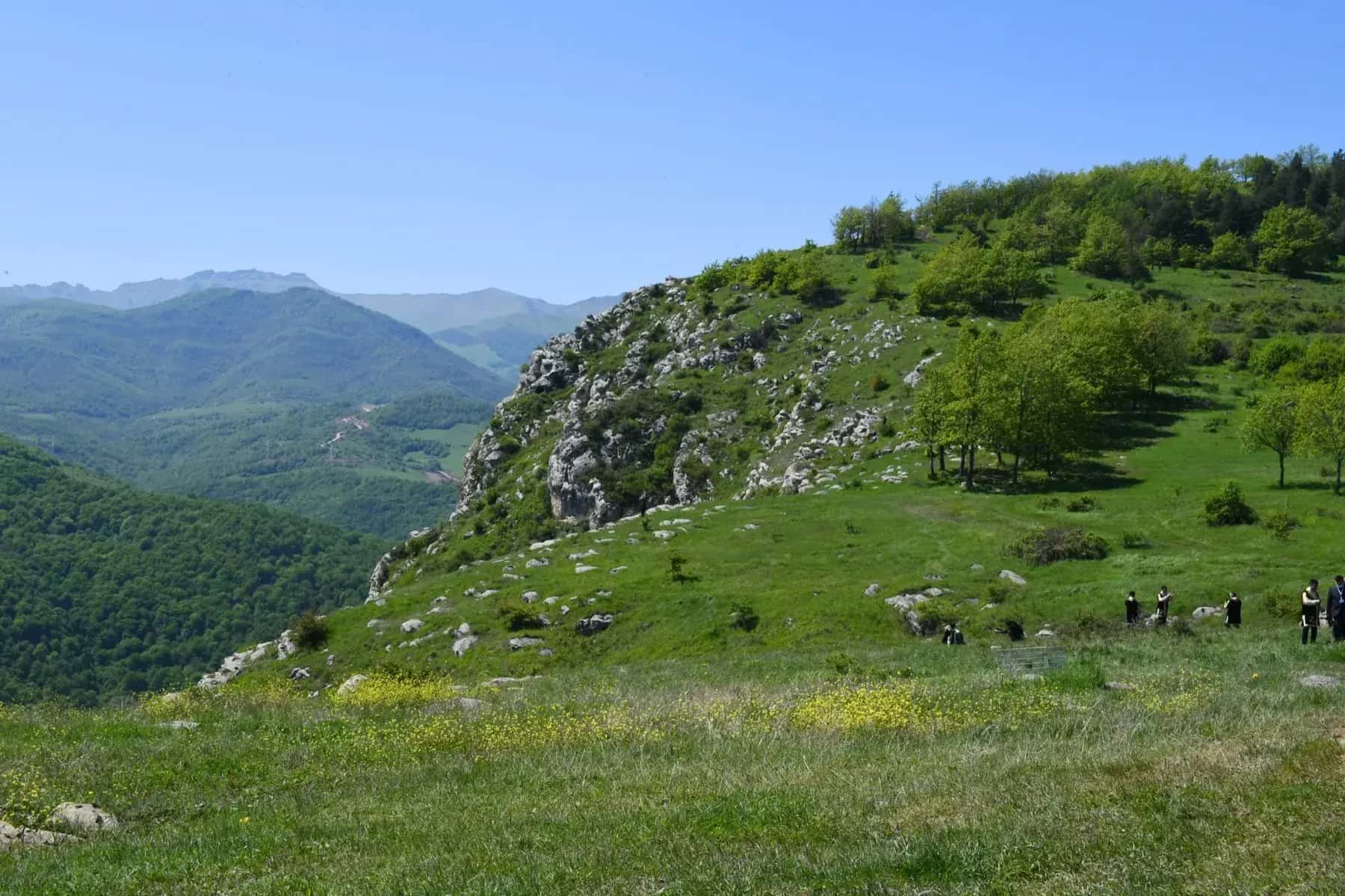
The horse is inseparable from the culture of Shusha and its famous Jidir Duzu plain, historically a place of horse races and gatherings. The image of Karabakh horses on that plateau is one of the enduring pictures of the region, linking the animal to the legendary plateau at the edge of the city.
Shusha was long a center of Karabakh's cultural life (a city of poets, musicians, and craftspeople) and the horse fits naturally into that world. Riding, breeding, and racing were part of the social fabric, and the open ground of Jidir Duzu gave them a stage. To understand why the breed matters here, it helps to know the city it grew up alongside; our guide to Shusha's fortress and history sets the scene, and the wider story of why Karabakh matters now explains why heritage like this carries such weight.
A symbol that traveled
The Karabakh horse became famous well beyond Azerbaijan, historically presented as a prestigious gift and celebrated in art and national imagery. Today it appears on emblems and in festivals, and efforts to protect and breed it are treated as a matter of heritage, the living equivalent of restoring a monument.
You will find the horse woven through Azerbaijan's visual culture: in paintings, on stamps and emblems, and as a recurring motif in decorative art. A prized animal handed over as a diplomatic gift was, historically, a serious gesture, a way of sharing something a region held dear. That the Karabakh horse played that role for so long says a lot about the esteem it enjoyed.
Living heritage, not a museum piece
What makes the breed compelling for a visitor is that it is still here. Unlike a ruin or a relic behind glass, the Karabakh horse is a living tradition that people actively keep going through breeding programs, stud records, and public appearances at cultural events. Protecting a rare breed is slow, careful work, much like the conservation of the region's other crafts and monuments, and it is treated with the same sense of stewardship.
That places the horse alongside Karabakh's other living traditions rather than its stone ones. It pairs especially well with Karabakh carpets, another craft where technique, pattern, and regional identity have been passed down by hand for generations. Seen together, the carpet and the horse tell you as much about Karabakh as any fortress wall.
Why it matters for travelers
Meeting the breed, or simply knowing its story, adds a dimension that stone sights cannot. It ties Karabakh's landscape, culture and identity together in a single, vivid image, and it pairs beautifully with the region's other living traditions, like the carpets above and the music and poetry Shusha is known for. Even if you only glimpse a Karabakh horse in a festival procession or a piece of art, you will read the rest of the region differently for knowing what it represents.
Planning around the tradition
The Karabakh horse is a cultural thread rather than a single ticketed attraction, so the best approach is to fold it into a wider Karabakh trip rather than build a day around it. Here is how we think about it in general terms:
- When to go: the shoulder seasons of spring and autumn are typically the most comfortable for travel in this mountainous region, with milder temperatures and greener landscapes. For a fuller picture, see our guide to the best time to visit Karabakh.
- How to fit it in: treat the horse as one strand of Karabakh's heritage alongside its architecture, carpets, and music. A three-day Karabakh itinerary leaves room to appreciate the living traditions as well as the monuments.
- What to look for: equestrian displays and cultural festivals are where the breed is most visible to visitors, so timing a trip around a relevant event is worth asking about when you plan.
- How we help: because access to specific sites and events changes over time, we keep on top of the current situation and build the tradition into a route where it fits. Share your interests and dates and we will suggest where it works best.
For the practical side of reaching the region and moving around it, our broader Karabakh tours pages and the wider Karabakh region overview are the places to start.
Which official signals support this
- the Karabakh horse is recognized nationally as a protected heritage breed of Azerbaijan
FAQ
What is the Karabakh horse?
It is an ancient mountain riding breed developed in the highlands of Karabakh, known for endurance, sure-footedness and a distinctive golden coat. It is one of Azerbaijan's oldest living national symbols.
Why is it linked to Shusha?
The breed is tied to the culture of Shusha and its Jidir Duzu plain, historically a place of horse races and gatherings. That connection is central to its image.
Why is the horse considered a national symbol?
Its long history, striking appearance and cultural role made it famous beyond Azerbaijan, and it appears in national imagery. Protecting the breed is treated as a matter of heritage.
What makes the coat so distinctive?
The breed is best known for a lustrous chestnut-gold sheen that shifts in the light, which is why its nicknames have long been tied to the sun. Coats vary between individual horses, but that golden quality is the trait most associated with the breed.
How does the Karabakh horse fit into a wider trip?
It works best as one strand of a broader Karabakh visit rather than a stand-alone stop, woven in alongside the region's architecture, carpets, and music. A three-day Karabakh itinerary gives you the room to take in the living traditions as well as the monuments.
Can travelers see Karabakh horses?
Yes, the breed features in festivals and equestrian settings. Share your interests and we'll suggest where the tradition is best experienced.
Want a trip that includes Karabakh's living heritage? Message Pink Travel on WhatsApp with your dates. Explore our Karabakh tours or reach out via our contact page.
Planifica tu viaje a Karabaj
Las principales páginas de planificación de Karabaj en un solo sitio
El hub, la página de circuitos, la página de Shusha y las guías clave están agrupados para que puedas construir contexto antes de decidir el viaje.
Durante mucho tiempo Karabaj se conoció sobre todo de lejos. Hoy Shusha, unas normas de acceso que cambian y la reconstrucción de la infraestructura turística lo están convirtiendo en un destino que se puede planificar con intención.
Rutas centradas en Shusha de uno a tres días, el permiso de entrada lo presentamos nosotros y un precio cerrado por persona antes de que te comprometas a nada.
Por qué el portal oficial del permiso de Karabaj no te sirve