
·7 min read
Why Karabakh routes are now becoming more focused and Shusha-led
A route-planning update on what's changing in Karabakh travel: clearer access, stronger Shusha-centered demand, and fewer overloaded programs.
One of the clearest changes in Karabakh trip planning is that routes are no longer built only around the question of where to go. Access, road rhythm, and the cultural weight of cities now shape the program much earlier.
That is why the strongest programs are now more focused, more selective, and more clearly built around Shusha.
What has changed
The main shifts are:
- Shusha is treated as the cultural center rather than a side stop
- access and logistics are considered from the start
- selected stops matter more than stop count
This makes routes cleaner and more convincing.
Why this works better
Karabakh is not a destination that benefits from stacking too many stops. Travelers respond better to atmosphere, selected panoramic moments, and a route that feels carefully shaped.
The region sits in the highlands of western Azerbaijan, where the drive itself is part of the experience: long climbs, mountain air, and wide valley views between towns. That scenery is one reason a slower, more selective route reads better than a packed checklist, the landscape rewards travelers who leave time to stop and look. If you want the seasonal picture before you commit to dates, our best time to visit Karabakh guide walks through what each season feels like on the ground.
Why Shusha anchors the route
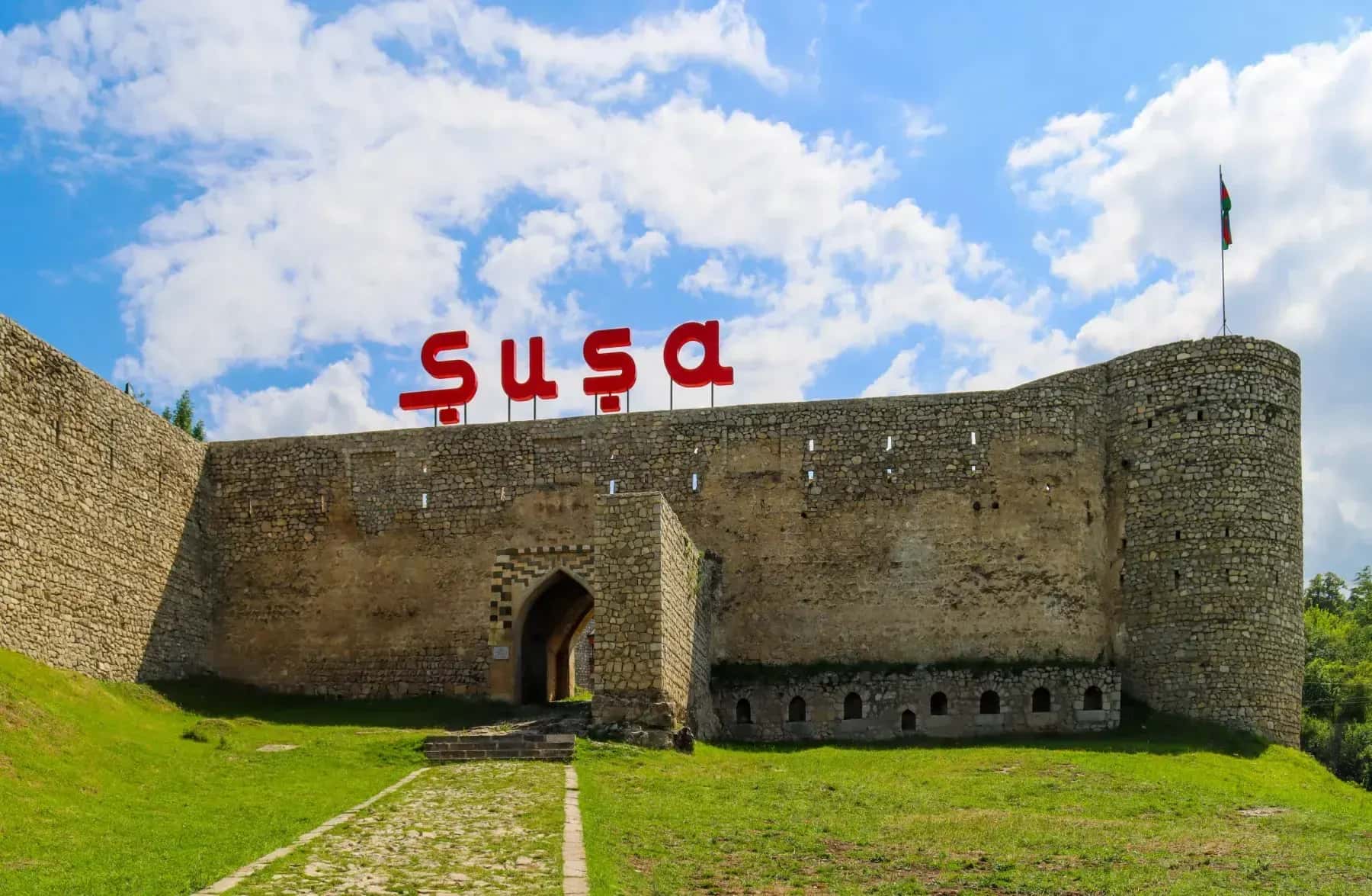
Shusha earns its place at the center for reasons that have nothing to do with logistics. Set on a fortress plateau in the highlands, it was for generations a major center of Azerbaijani music and poetry, the home town of many celebrated musicians and poets, and long associated with the mugham tradition of classical song. Its walled old town, mosques, and historic mansions give the city a density of heritage that a single day can only begin to cover, which is exactly why programs now build outward from it rather than treating it as one stop among many. Our Shusha fortress history guide fills in the deeper background, and Shusha's music heritage explains why the city is so tied to song.
Building around Shusha also makes the rest of the route easier to shape. Once the cultural center is fixed, the surrounding stops (panoramic viewpoints, roadside monuments, smaller towns) fall into a natural order rather than competing for attention. For a worked example of how the pieces fit together over a few days, see our Karabakh 3-day itinerary.
Planning basics: season, length, and pace
A focused Karabakh route does not need to be long. Many travelers find that a couple of unhurried days around Shusha, with time built in for the drive and a few chosen viewpoints, delivers more than a rushed dash through a longer list. If you are combining Karabakh with the rest of the country, it slots naturally onto the end of a wider loop. See how a full trip can be strung together in our 7-day Azerbaijan itinerary.
Season matters here more than in lowland Azerbaijan. The highland setting means spring and autumn are typically the most comfortable windows, summers stay cooler than Baku, and winter conditions in the mountains call for extra care with timing and packing. Bring layers whatever the month, mountain weather shifts quickly, along with comfortable shoes for uneven old-town streets, sun protection for exposed viewpoints, and enough water and snacks for stretches of road between towns. For how the seasons compare in detail, our best time to visit Karabakh guide is the place to start.
Practical result
Before you start planning, clarify two things: is Shusha the center, or do you want a broader Karabakh overview? Then check the Karabakh access guide and confirm current conditions on the official sources. The route usually becomes much stronger after that.
FAQ
Why are Karabakh routes now more focused?
Because access and road rhythm shape the plan early, and Shusha is treated as the cultural center rather than a side stop. Selected stops now matter more than the total stop count.
Should I pack many stops into one Karabakh program?
No. Karabakh does not benefit from stacking stops. Atmosphere and a few carefully chosen panoramic moments make a stronger experience than a crowded checklist.
What should I clarify first when planning?
Decide whether Shusha is the center of the trip or you want a broader Karabakh overview, then read our Karabakh access rules and see the Karabakh region overview.
Why is Shusha treated as the center?
Because it carries an unusually deep concentration of Azerbaijani cultural heritage, a fortress-plateau old town long known as a center of music, mugham, and poetry. Anchoring the route there gives the trip a clear focus, and the surrounding stops fall into place around it. Our Shusha city guide has more on what to see.
How long should a focused Karabakh trip be?
There is no fixed rule, but a short, unhurried route around Shusha usually reads better than a long, crowded one. Two relaxed days centered on Shusha, with time for the drive and a few viewpoints, suits many travelers; add more only if you genuinely want a broader overview. See our Karabakh 3-day itinerary for one shape it can take.
When is the best time of year to go?
Karabakh sits in the highlands, so spring and autumn are typically the most comfortable, summers are cooler than the lowlands, and winter in the mountains needs extra care with timing and packing. Our best time to visit Karabakh guide breaks the seasons down.
Ready to shape your route? Message Pink Travel on WhatsApp with your dates and priorities, and we'll build a focused, well-paced Karabakh program around the official framework.
Plan Your Karabakh Trip
The main Karabakh planning pages in one place
The hub, tours page, Shusha page, and key guides are grouped together so readers can build context before making a travel decision.
For a long time, Karabakh was mostly known from a distance. Now Shusha, changing access rules, and rebuilding tourism infrastructure are turning it into a destination people can plan with more intention.
Shusha-led routes of one to three days, your entry permit filed for you, and a firm per-person price before you commit to anything.
Why the official Karabakh permit portal won't work for you