
·9 min read
Momine Khatun Mausoleum: the jewel of Nakhchivan
The Momine Khatun Mausoleum in Nakhchivan, the 12th-century masterpiece by Ajami Nakhchivani, its geometric brickwork, and its architectural legacy.
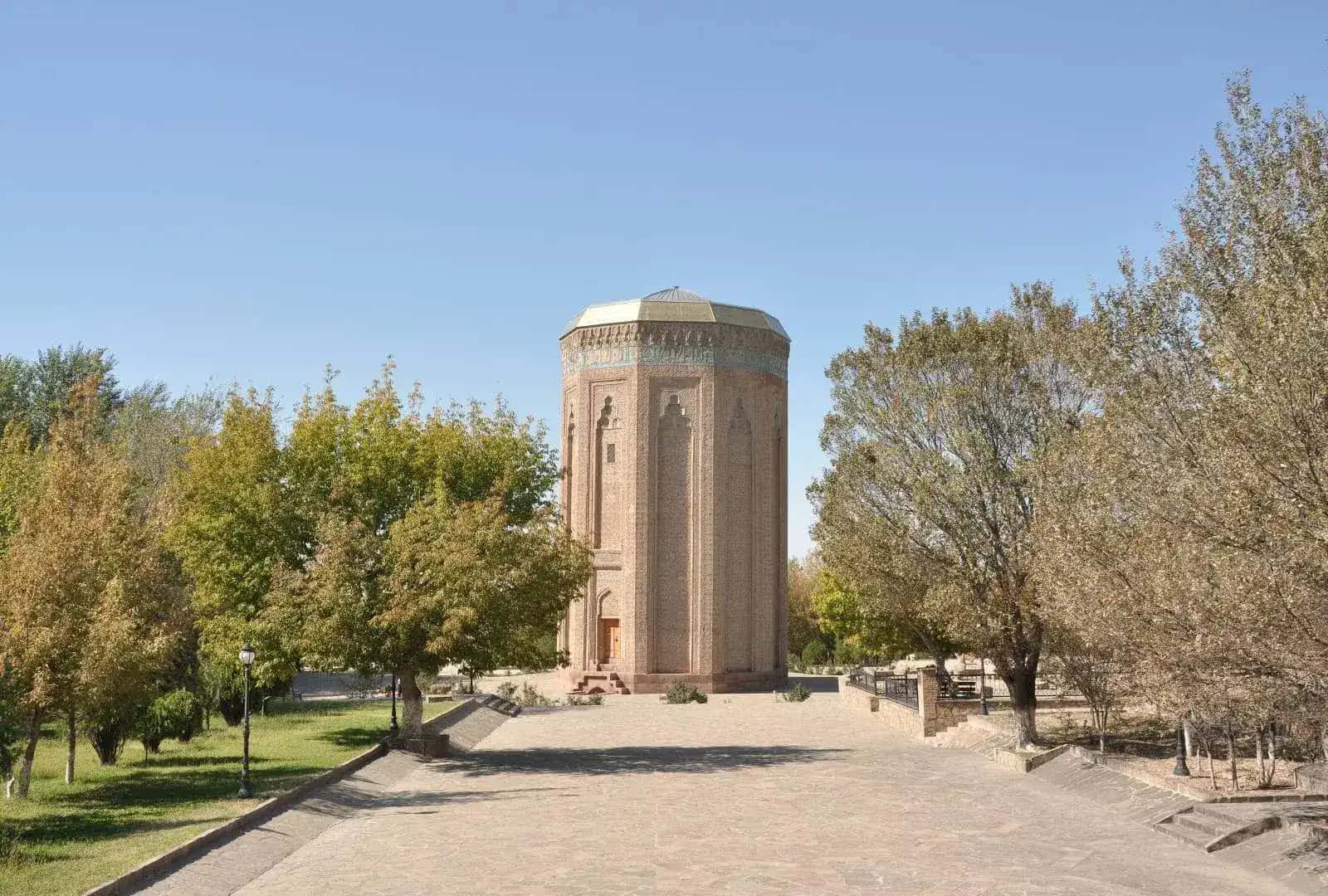
In the city of Nakhchivan stands a tapering ten-sided tower covered in intricate brick geometry, the Momine Khatun Mausoleum. Built in the 12th century, it is one of the masterpieces of medieval architecture in the whole Caucasus, and it introduces travelers to a name every fan of Azerbaijani heritage should know: Ajami Nakhchivani. Most people who make the trip out to the exclave remember this monument as the single image that stays with them, and it's the natural first stop on any Nakhchivan visit.
The mausoleum and its architect
The Momine Khatun Mausoleum was raised in the 12th century and is attributed to the great architect Ajami Nakhchivani, the founder of the Nakhchivan architectural school. Ajami's genius was in geometry: the tower is a decagonal prism whose surfaces are covered with interlocking patterns and Kufic inscriptions, worked entirely in brick and glazed tile. The result is a building that feels mathematical and alive at once.
What draws the eye first is the rhythm of the ten facets. Each side carries its own woven band of brick, and where a lesser builder might have repeated one motif, Ajami varied them so the tower reveals something new as you walk around it. Look closely and you'll pick out turquoise glazed tile set into the fired brick, a restrained use of color that catches the light without overwhelming the geometry beneath it. Inscription bands in angular Kufic script run around the structure, tying the ornament to the monument's purpose as a tomb.
The building is a tomb tower, a form that spread across the medieval Islamic world, and it takes its name from Momine Khatun, a woman commemorated by the ruling Eldiguzid (Atabeg) dynasty that governed the region in this period. That patronage matters: monuments like this were statements of power and piety as much as memorials, which is part of why so much skill and cost went into them.
Why it matters
Momine Khatun is not just beautiful; it is historically pivotal. Ajami's work here and elsewhere in Nakhchivan set a standard for tomb-tower architecture that influenced the region for centuries. For travelers, it is the clearest example of how sophisticated medieval Azerbaijani architecture was, a monument that stands comparison with the great buildings of the wider Islamic world.
It also anchors the identity of Nakhchivan itself. The tower has become the city's defining emblem, the shape that shows up on postcards and civic imagery, much the way the Maiden Tower represents Baku's Old City. Seeing it in person is the quickest way to understand why the exclave is proud of a heritage that reaches back nearly a thousand years.
Nakhchivan's architectural school
The mausoleum anchors a wider story: Nakhchivan as a center of architectural innovation. Ajami's decagonal and geometric approach became a recognizable school, and the region preserves other monuments in the same tradition. Ajami is also credited with the nearby Yusuf ibn Kuseyir tomb, an earlier work that shows the same fascination with faceted form and brick ornament. Read together, the two buildings sketch the development of a distinct local style.
Seeing Momine Khatun frames the rest of a Nakhchivan visit, including the dramatic Alinja Castle in the mountains nearby, a mountaintop fortress reached by a long climb of stone steps. The mausoleum belongs to a broader landscape of Azerbaijani heritage sites; our guide to Azerbaijan's monuments sets it alongside the country's other landmark structures.
What to see on site
The mausoleum stands in a green, open setting in central Nakhchivan, which means you can take it in slowly and photograph it from several angles.
- Walk the full circle. Because each of the ten faces carries a different brick pattern, circling the tower is the whole experience, don't just photograph the front and move on.
- Look up at the inscription bands. The Kufic lettering is part of the ornament, not separate from it; catching it in raking morning or late-afternoon light brings the relief to life.
- Notice the glazed tile. The turquoise accents against warm brick are easy to miss at a glance and lovely once you're looking for them.
- Give it time, then pair it. The site itself is compact, so most travelers combine it with other city sights, Noah's Mausoleum and the Nakhchivan museums are close by, and Alinja and the Duzdag salt cave round out a longer stay.
How to visit
The mausoleum sits in the city of Nakhchivan, the center of Azerbaijan's exclave region, which is reached by air from Baku. Because the exclave is separated from the rest of the country, a short domestic flight is the standard, reliable way in and out. Momine Khatun is right in the city, so it's an easy stop rather than an expedition; the effort is in getting to Nakhchivan itself, not in reaching the monument once you're there. For the full practical picture (flights, sights, and timing) see the Nakhchivan travel guide.
Best season. Spring and autumn are the most comfortable times to visit, with mild temperatures for wandering the grounds and for the open-air sites elsewhere in the region. Summers in Nakhchivan can be very hot and winters cold, so the shoulder seasons generally give you the easiest conditions.
How long you need. The mausoleum itself is a short visit. You can walk around it properly and take photos without rushing. It works best as the opening act of a wider Nakhchivan itinerary that also takes in Alinja and the exclave's other highlights.
What to bring. Sun protection in the warmer months, since the setting is open, and comfortable shoes if you're pairing the mausoleum with the climb up to Alinja. Always check current opening times and any entry details locally before you go, as these can change.
Which official signals support this
- the mausoleum and Ajami Nakhchivani's school are documented landmarks of medieval Azerbaijani architecture
FAQ
What is the Momine Khatun Mausoleum?
A 12th-century tomb tower in the city of Nakhchivan, a ten-sided brick monument covered in geometric patterns and inscriptions. It is a masterpiece of medieval architecture in the Caucasus.
Who was Ajami Nakhchivani?
Ajami Nakhchivani was the 12th-century architect credited with the mausoleum and regarded as the founder of the Nakhchivan architectural school, known for geometric brickwork.
Why is it significant?
Its geometric design set a standard for tomb-tower architecture that influenced the region for centuries, and it demonstrates how advanced medieval Azerbaijani architecture was.
How do I get to Nakhchivan?
Nakhchivan is Azerbaijan's exclave, reached by air from Baku. Message us and we'll help plan a visit that includes Momine Khatun and Alinja.
How much time should I set aside for the mausoleum?
The mausoleum itself is a short visit, enough time to circle it, read the inscriptions, and take photos. Treat it as the first stop on a wider Nakhchivan visit rather than a destination on its own.
What else can I see near the mausoleum?
The tower is in central Nakhchivan, close to other city sights such as Noah's Mausoleum and the local museums, with the mountaintop Alinja Castle and the Duzdag salt cave farther out. Our Nakhchivan travel guide maps out how they fit together.
When is the best time to visit?
Spring and autumn are the most comfortable, with mild weather for the open-air setting. Summers can be very hot and winters cold, so the shoulder seasons are the easiest for sightseeing.
Is Nakhchivan worth the trip for one monument?
The mausoleum alone rewards architecture lovers, but the exclave as a whole (Alinja, the salt cave, the mountains, and the quieter pace) makes the flight worthwhile. It's a different side of the country from Baku and the central regions; see why travel to Azerbaijan for how the regions connect.
Want to see one of the Caucasus' architectural masterpieces? Message Pink Travel on WhatsApp with your dates. Explore our tours or reach out via our contact page.